Skip to content

Jay Maisel

Favorites
  • Collections
  • Books
  • About Jay
  • News
  • Information
  • Contact
  • Search

Shopping Cart

- +
Subtotal
Shipping & taxes calculated at checkout
Checkout

Favorites

What constitutes a favorite is that after seeing it every day for years, it doesn’t lose its power.

I know some photographers who are always quite delighted with everything they do. I wish I was like that, but I find a great many of my images lose their power or at least my interest at some later date. Either I’m not interested in the subject anymore or I’m just no longer impressed with the image.

Arthur Meyerson, a very good Houston, Texas, photographer, is a buddy of mine. At one point he offered me his studio for an exhibit of my images for FotoFest in Houston. This was an exhibit of 85 images. Another friend of mine, Gary Winter, was doing a video on me. He’s one of these guys who doesn’t intrude when he’s shooting—a real “fly on the wall” type—so when he asks a question, it’s a rare occurrence.

“So, Jay,” he said, “What’s the reason you picked these particular 85 pictures for this show?”

“They’re my favorites.”

“I was hoping for something a little more insightful and articulate, ” he replied.

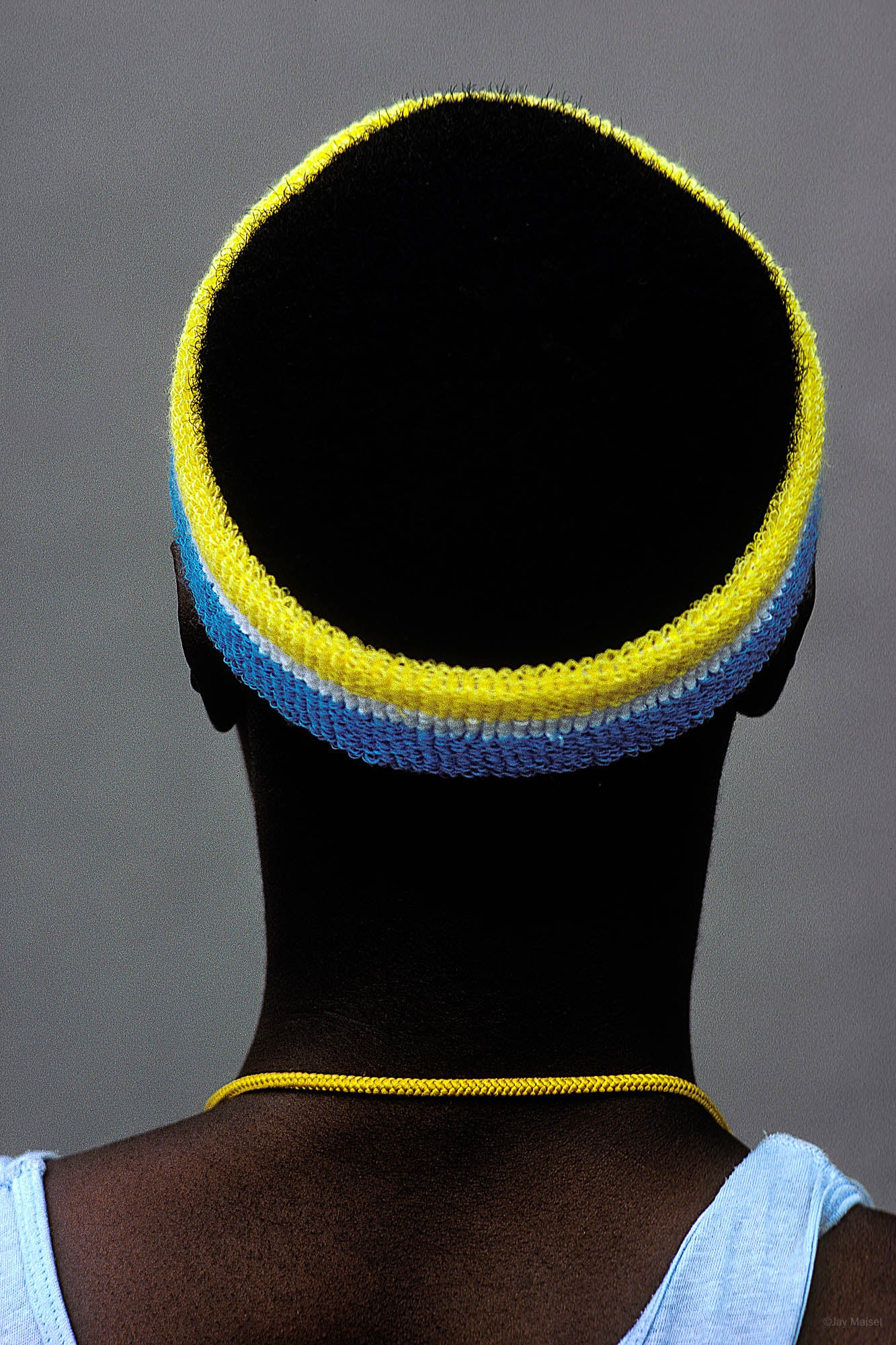
I thought about it and realized after looking at one particular image what was behind my choices. I explained that when I shot “Man with Headband,” I was anxious, even terrified because I knew all the things that could go wrong. It was like a litany: “Please don’t let the light change,” Please don’t let somebody walk in front of him,” “Please don’t let him turn around.” I realized at that point that each and every picture in the show was a variation of this. A moment charged with all the things that move me, and the fear of losing it. The apprehension, the near certainty that something or someone, if not myself, was going to compromise the image.

There is an emotional seesaw on perceiving what you think is a great image. It moves between glee and trepidation. The more excited I am, the better the image, the more naked emotion I feel, the more exhilaration there is, the more it is counterbalanced by the certainty that something is going to f*¢% this up.

This anxiety never happens with pictures that are less compelling or less emotional. It never happens with pictures that are intellectually motivated or studies, or with pictures that are about information, history, or pure documentation.

These favorites have stood the test of time, even though they’re mine they still work for me, and I do love them.

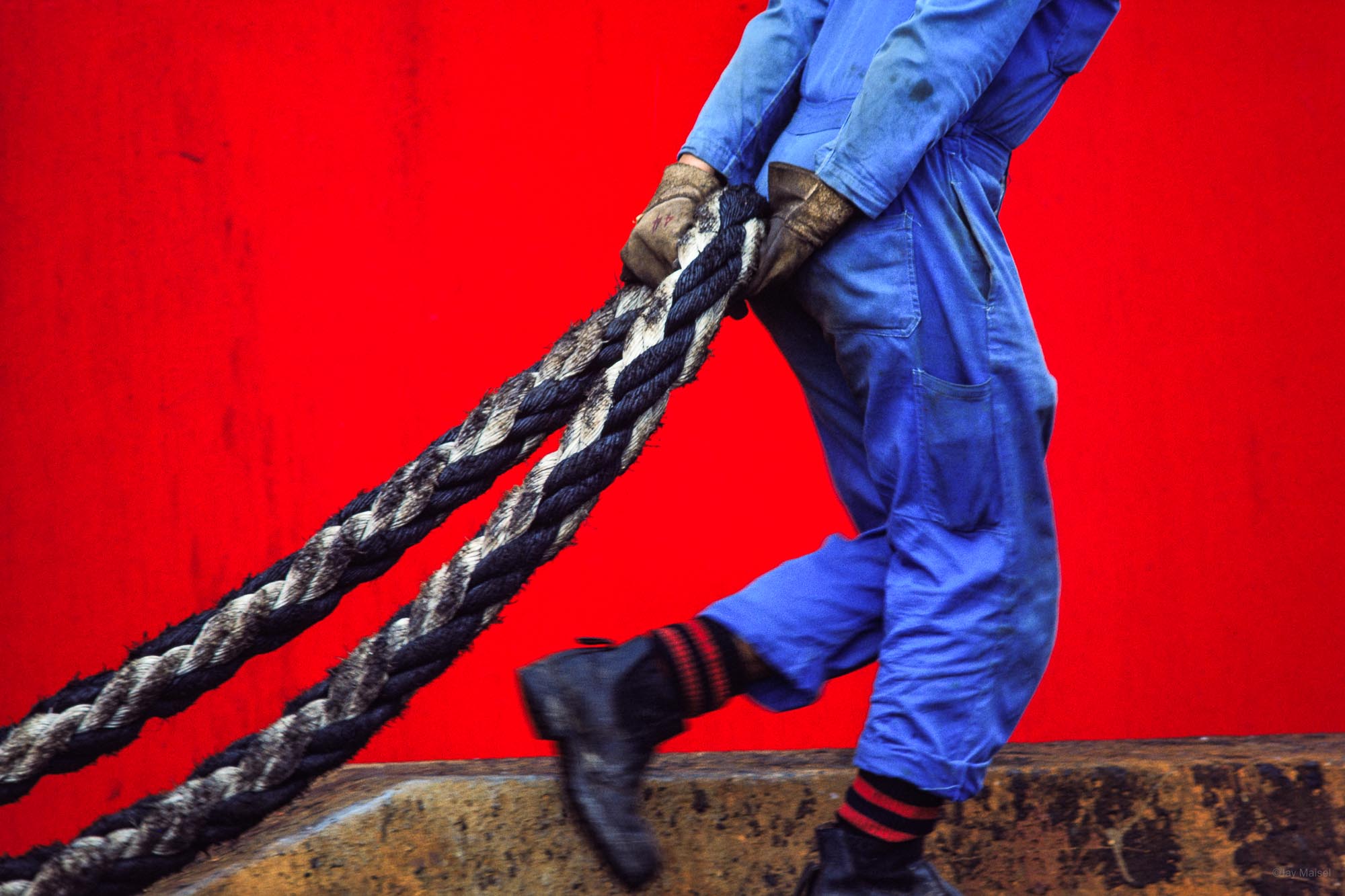
Red Wall and Rope, Singapore

“Always carry a camera; it’s much easier to take pictures that way.” This is the major advice I give to my classes. What I’m trying to convey is that I try never to go out shooting, but to always have a camera with a lens on it – nothing else. Because the more equipment you take, the less pictures you take.

This image was shot in Singapore. I was on a commercial job shooting bankers in their offices – really limiting. I was finished with one shot and was on my way to another location when I saw this. Again, I got two shots off before the guy was gone; one with his head, one without. I think the one without the head works best, but if you asked me why, I’d say it’s intuitive and has no logical reason.

Print Info
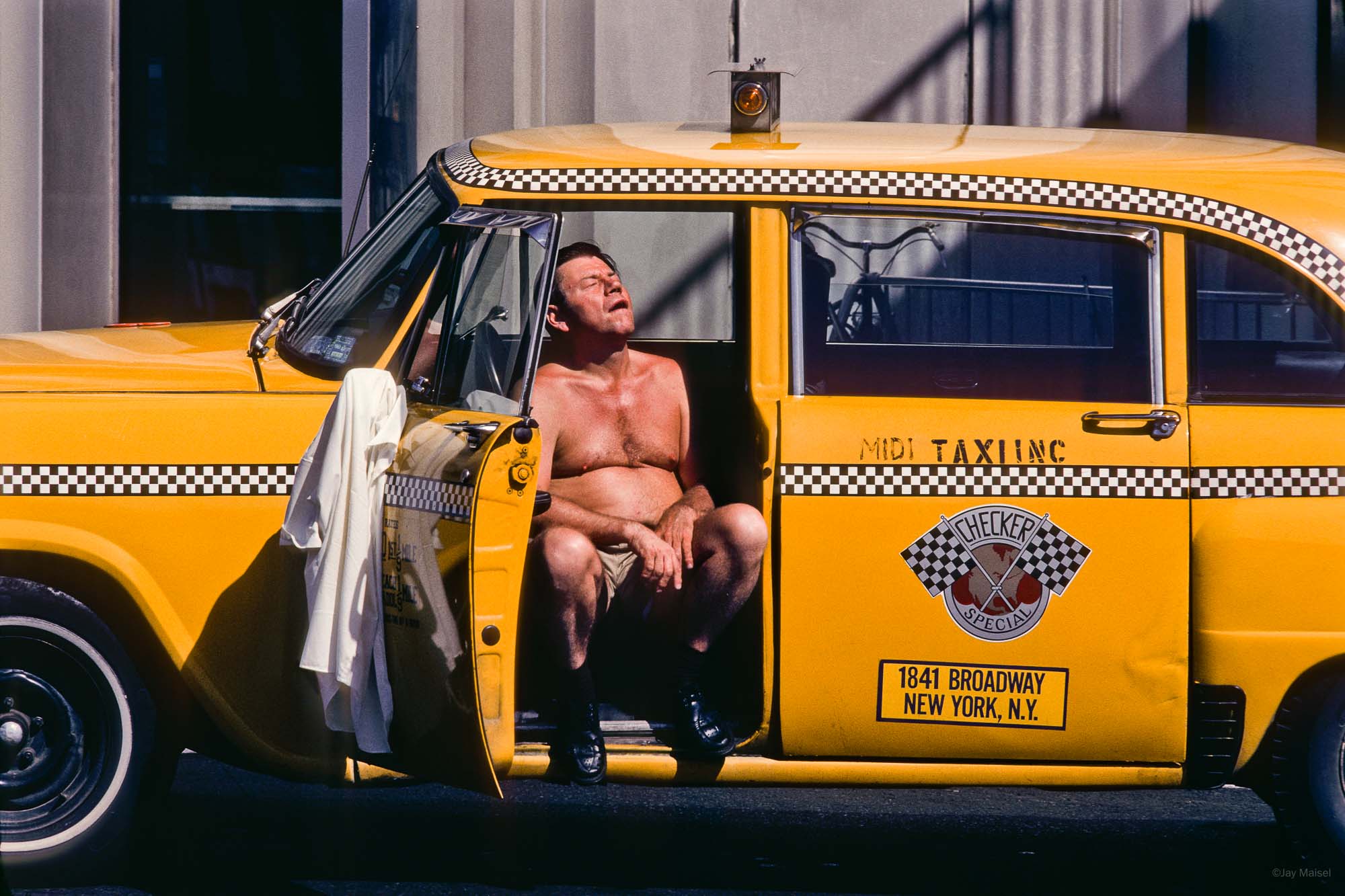
Hot Cabbie, NYC
Hot Cabbie, NYC
Print Info
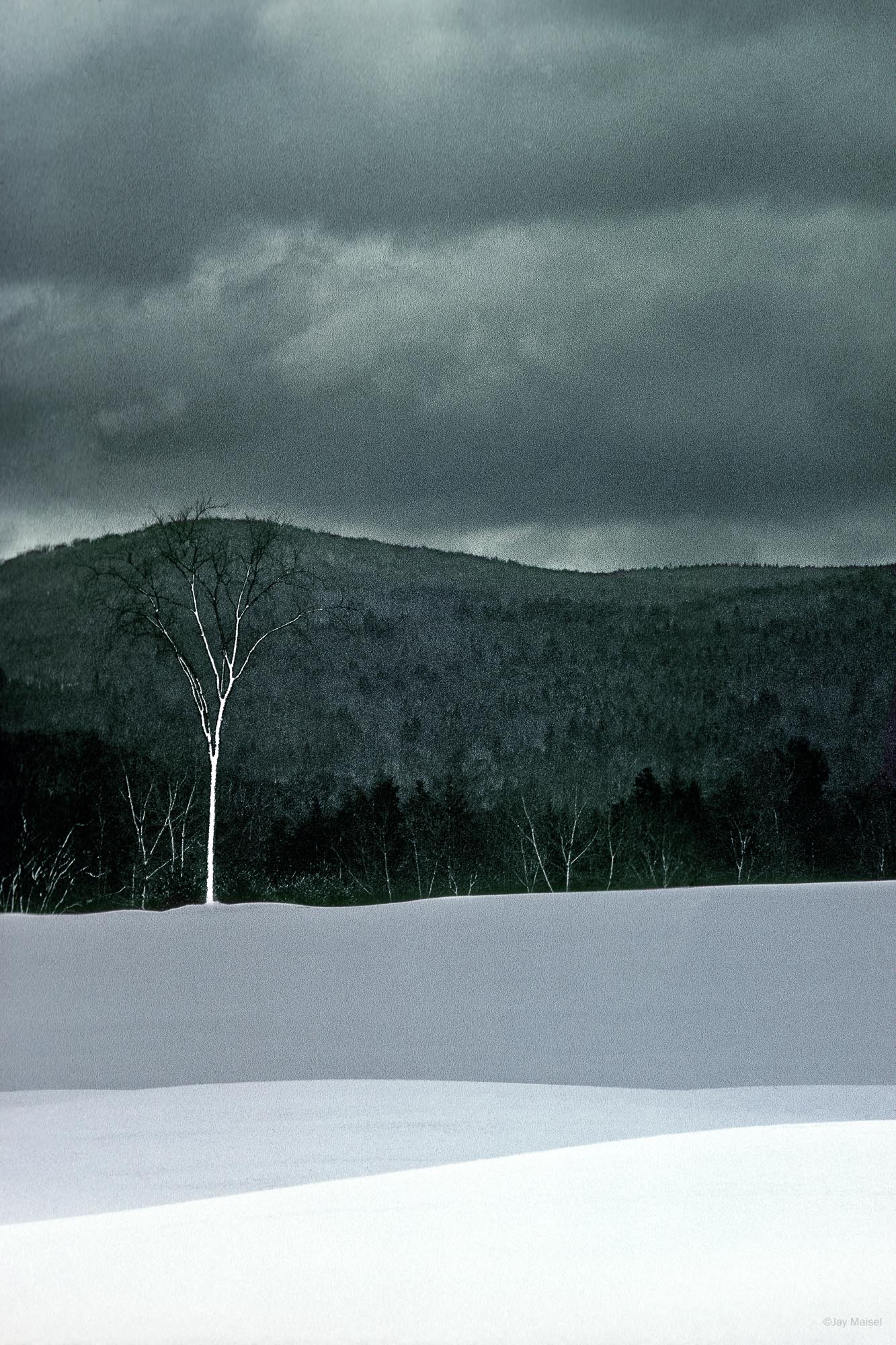
Lone Tree in Snow
Lone Tree in Snow

Excerpt from Not About the F-Stop:

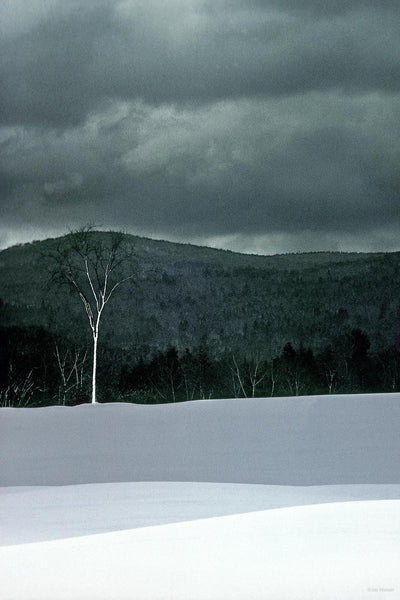
I was in Pittsfield, Massachusetts, working on a piece on Herman Melville for the now-defunct Show magazine. I had an appointment at the local library to photograph the original logbook he had signed. 

I left my hotel and started driving. There had been snow and the drive was beautiful. I saw this scene and said to myself, “That’s great, but I have an appointment. I’ll come back later and shoot it.”

The small voice that takes over in my head said, “Do it now,” so I stopped, got out of the car, and shot this image. When I was finished at the library, I drove immediately back to the snow location. There was no snow anywhere, at all. Zip. Nada. There was no longer any photo.

I’m reminded of the quote, “You can’t step in the same river twice,” and ever since then I have been telling students, “Never go back.” They are confused, so I explain that I mean you have to shoot it now. If you go back, it will never be the same. It may be better, it may be worse, but never the same. It can be extremely valuable to return to something again and again to try different light, different viewpoints, and different attitudes, but always shoot first, then think about the future.

Print Info
Groundskeeper
Groundskeeper
Print Info
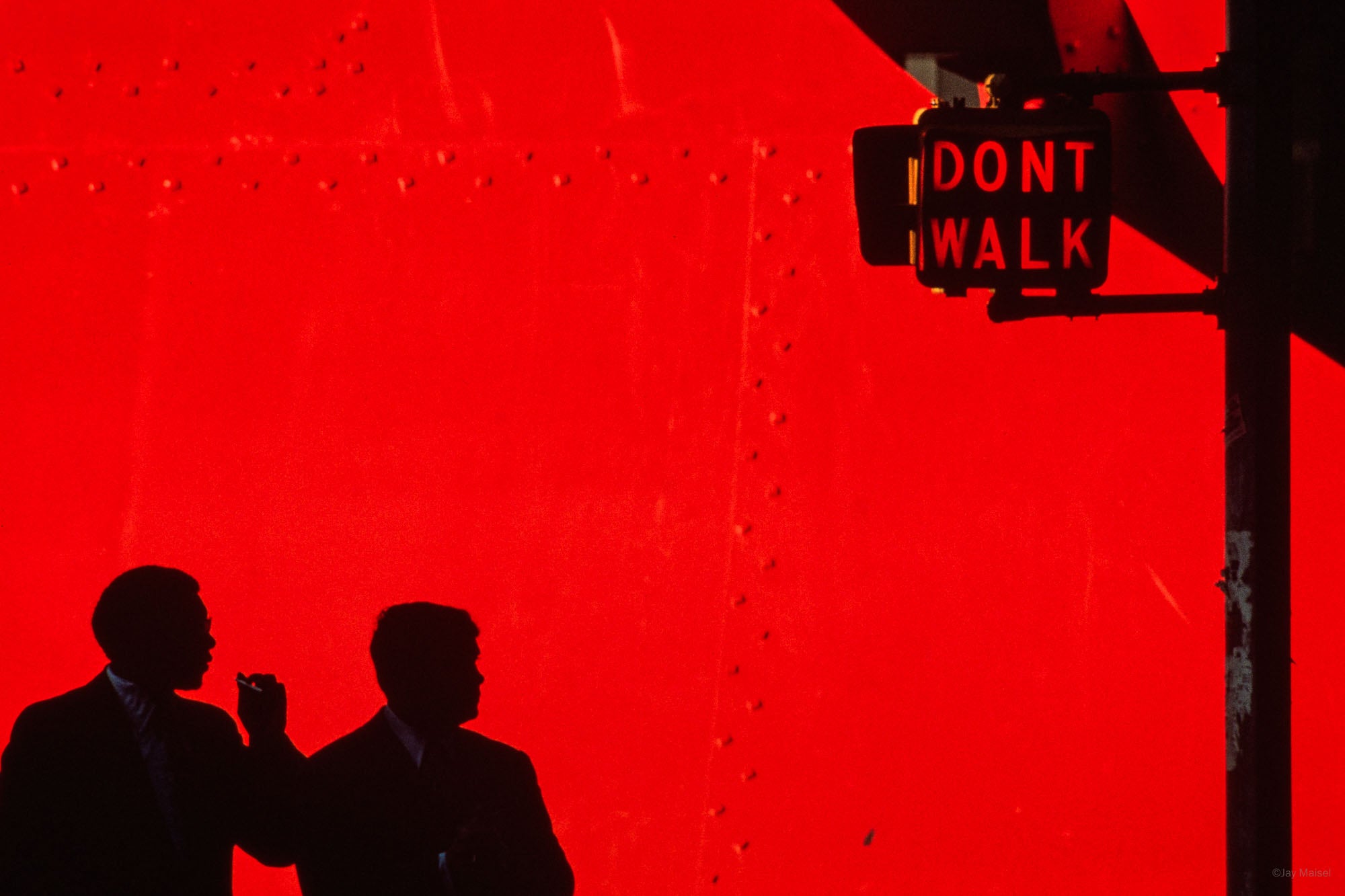
Don't Walk, Red, NYC

Excerpt from Light Gesture & Color:

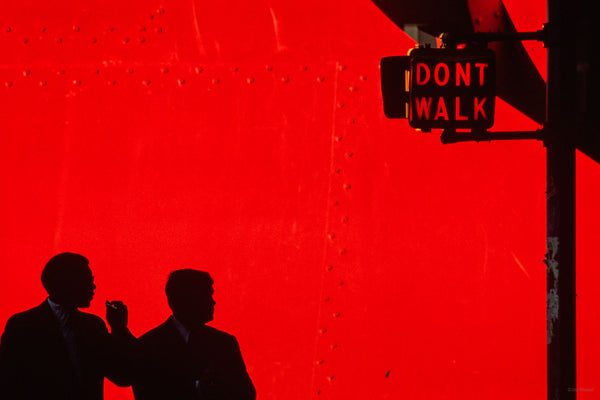
Sometimes as you’re walking you get hit by a color and there’s no turning away.

When I saw this red I knew had I to shoot it.

It was a “stabile,” Alexander Calder’s name for his sculpture that did not move. Most of his stuff did move and moved well. These he called, “mobiles.”

It no longer exists. It was at the corner of the World Trade Center and was demolished on September 11, 2001.

When I saw it it was just the red, nothing else at all. I did what one has to do, I waited and waited…waited…. finally these two men appeared and I probably should have waited longer to try other people, but I had “waited” long enough.

A terrible phrase which implies that something is more important than shooting.

But sometimes you lose focus and that’s not a pun.

Print Info
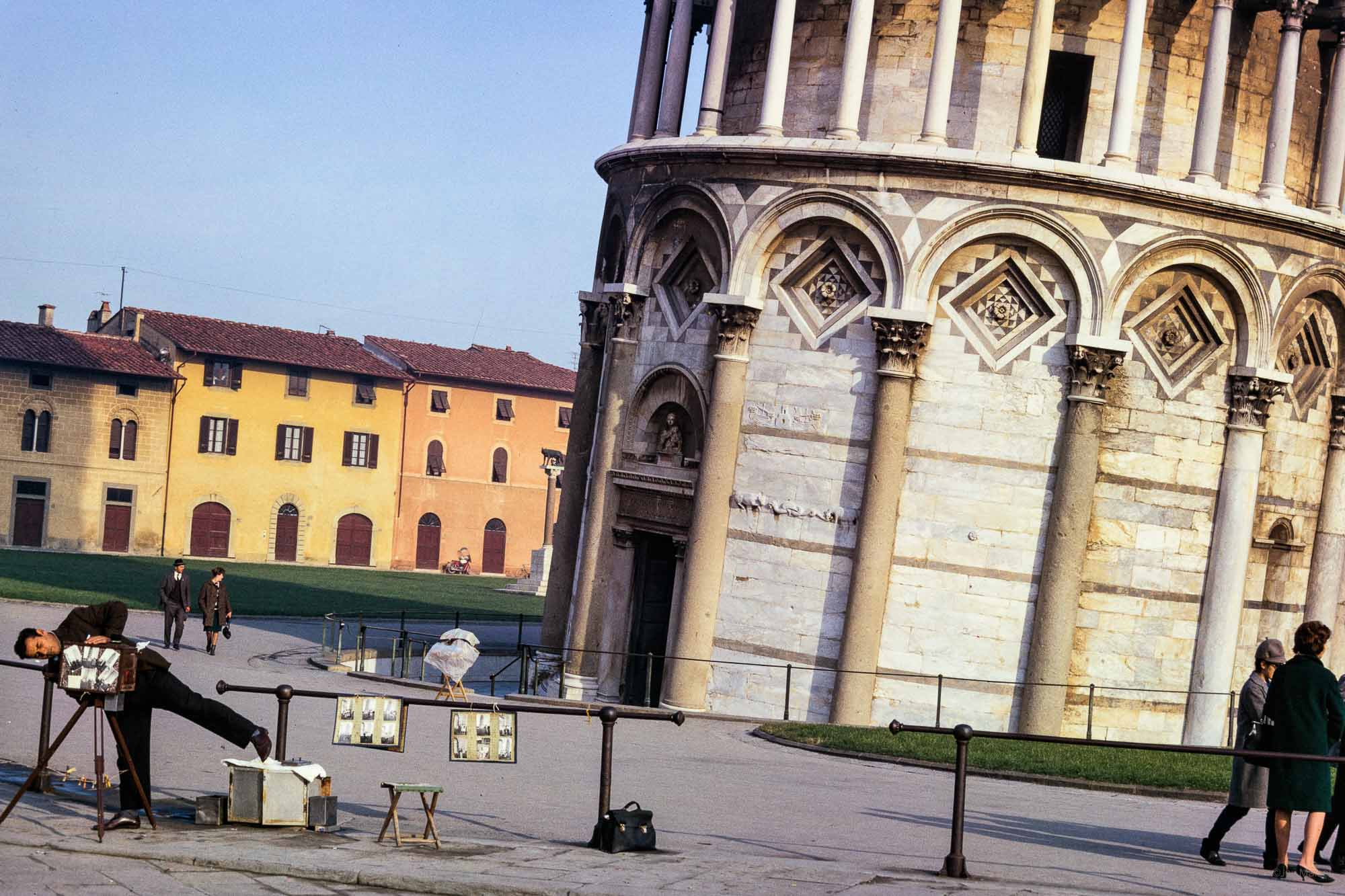
The Leaning Photographer of Pisa, Italy
Print Info
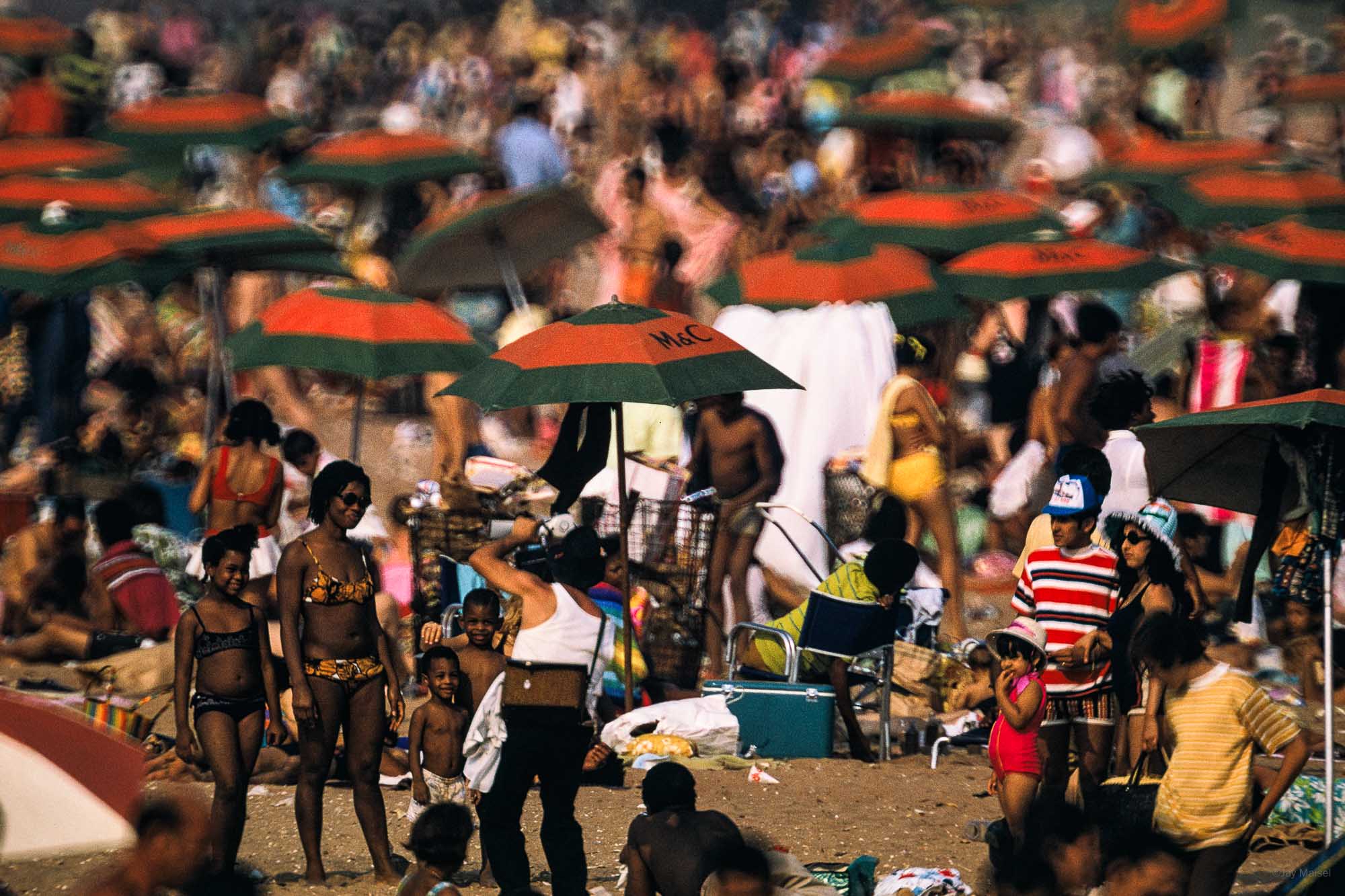
Coney Island, Brooklyn


Print Info
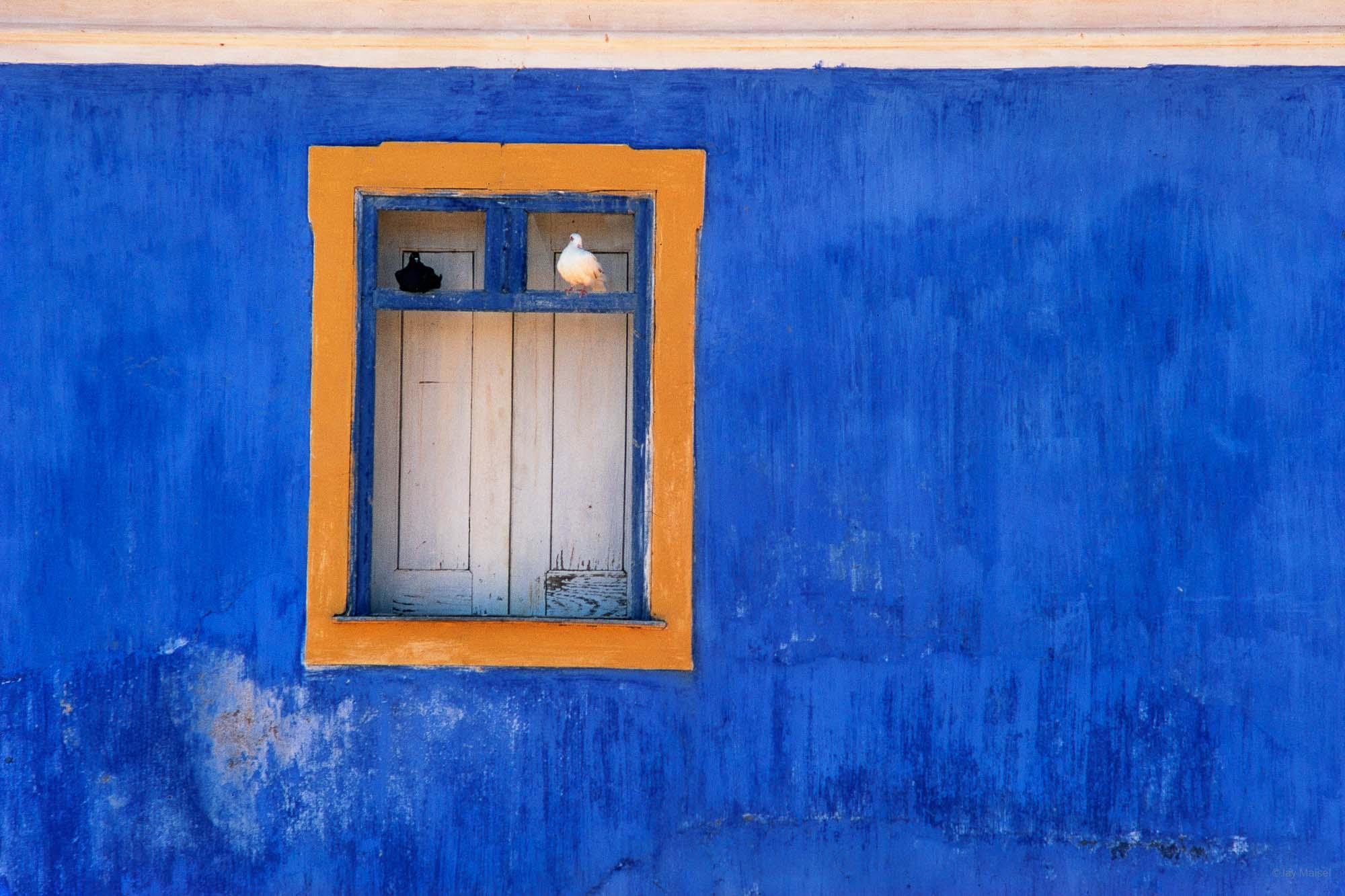
Blue Wall and Doves, Portugal
First off, I want to end the ugly rumor right here and now that I carry those two birds around with me. This was in southern Portugal. Like all my work, it is pretty much ‘find something that reaches out to you, shoot it, try not to fuck it up, and if possible, cover it as many ways as you can.’ Ernst Haas said, “we do not take pictures, we are taken by pictures.” This is only true if you are open to what is out there.
Print Info
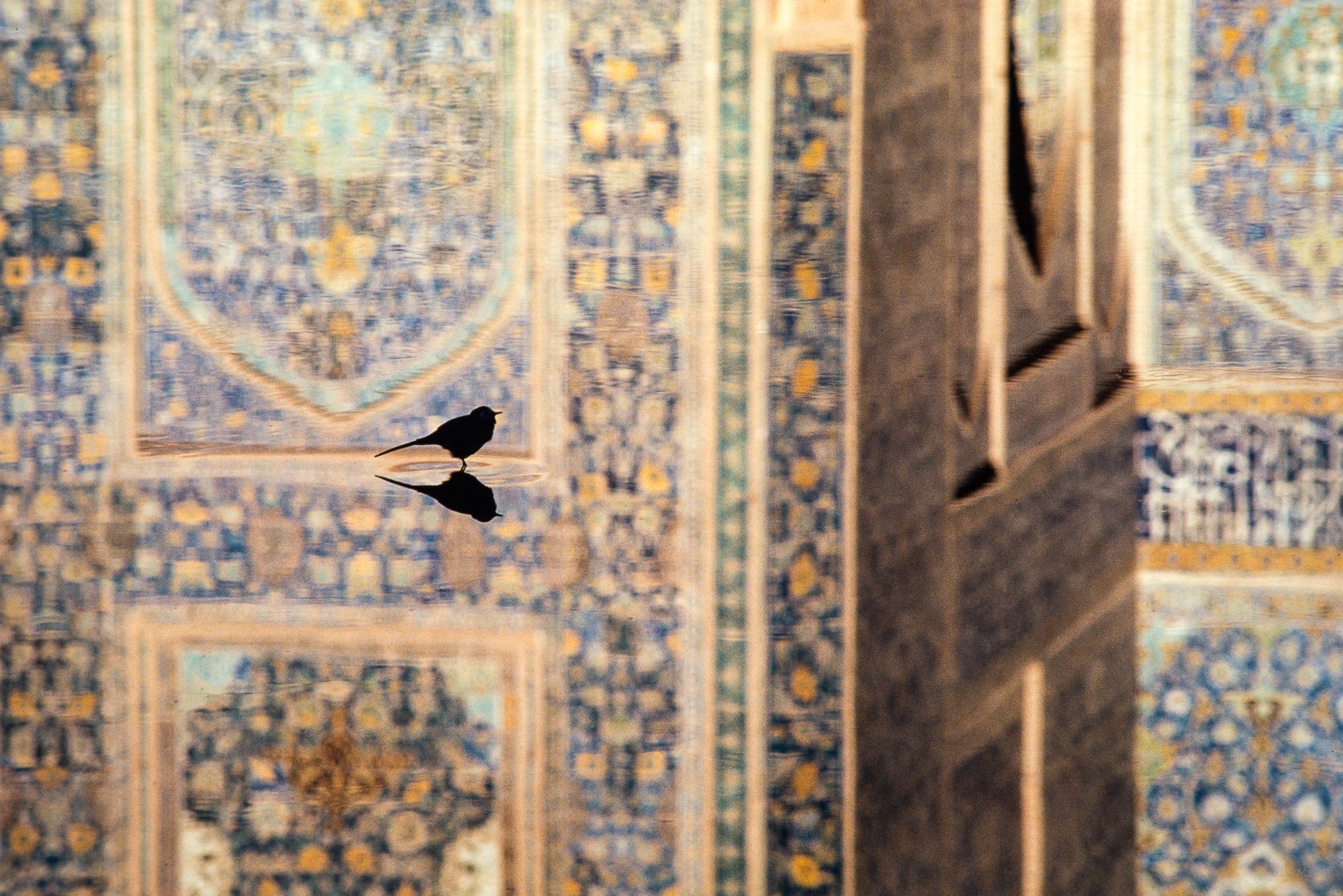
Bird, Iran
Bird, Iran

Excerpt from Light Gesture & Color:

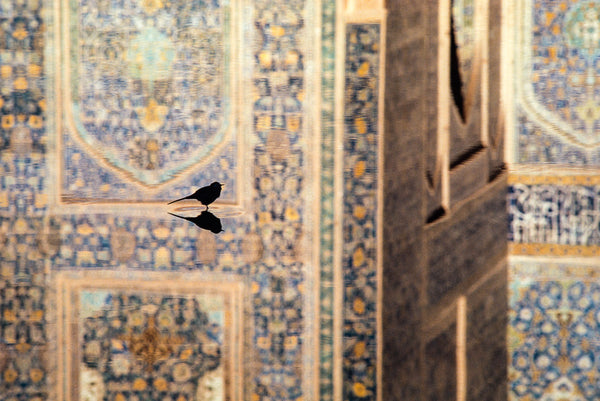
I was shooting in Isfahan, Iran. It was one of a series of towns that I was shooting in for a book called, “Festival of Persepolis: A Celebration of the 2500th Year of Founding the Persian Dynasty.”

I had been happy with a lot of the stuff I got, but when I saw this I nearly wet my pants. I was so excited that I had to severely admonish myself. Don’t rush, don’t shoot with the motor or he’ll fly off. I think it was the first time in many years I shot this and all of the next few shots without a motor. I was just blown away with range of color and how it all related to this little black bird.

The shot was okay without the bird, but the “bird was the trigger."

Always wait for the trigger. The trigger is the final part of the puzzle. The resaon you want to shoot.

Print Info
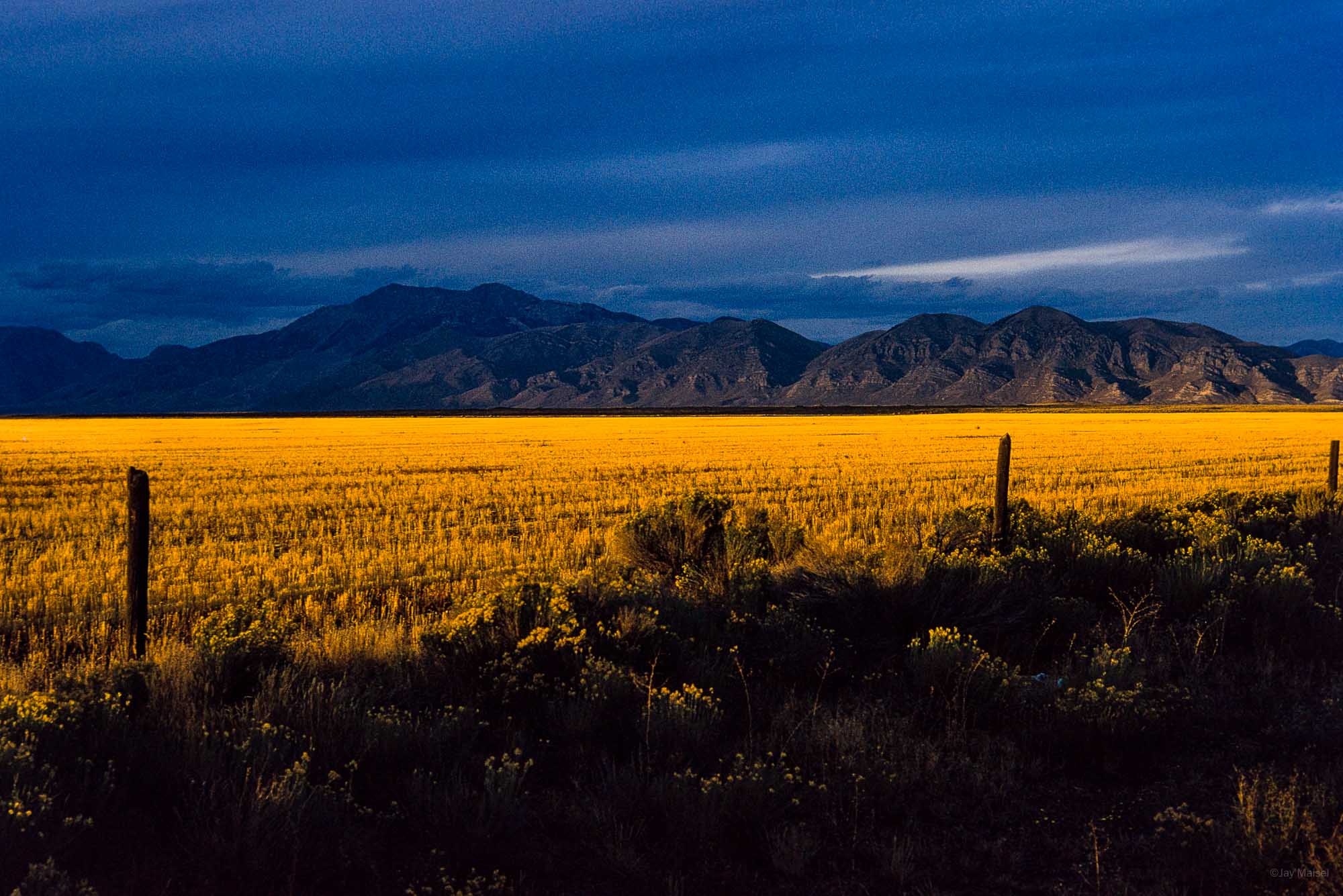
Blue Sky and Yellow Field, Idaho

This is one of these pictures that really needs no explanation. So I’ll give you one.

I’ll put it in context.

I had an assignment to photograph Craters of the Moon National Monument & Preserve. This place is so aptly named that some of the first astronauts were sent there to experience it to prepare them for the moon itself. There is no color there. Everything is gray and if you look very closely you might see colored lichen, but the overall feeling is gray, gray, gray.

I got there early, and watched the light change all day. I was overcome by the bleakness of it and stayed till it closed up. I always thought it was weird that a national monument would close at 6:00. But nothing surprises me with rules and regulations anymore.

I left grumbling to Gabe, my assistant. Gabe was a Honduran Indian, quiet, totally dependable, and mischievous. As we left Craters of the Moon, we turned onto the main road and this image is what I immediately saw.

“Oh my god, color!”

I grabbed my camera, ran across the street, and started shooting. Gabe, usually right beside me, ready with the lenses and cameras, was sitting in the car. (By the way, Gabe could not pronounce Jay so he called me Hay.)

Gabe was always was at my side, so I wondered why he was sitting in the car with a slight smile on his face. This was therapy, beautiful color after 10 hours of gray, I was now really happy. He looked at me as I was shooting, “Hey! Hay! Don’t get too excited. You’re on your last roll of film.”

Note:  I had a large 40x60" dye transfer of this in my gallery. Some guy came over, looked at me, and said, “I know exactly where that is.” I said, “Bulls#[†, you don’t even know what state it’s in.” He looks at me and says, “Idaho, right outside Craters of the Moon.” He made me feel like the presumptuous a$$hole I sometimes am. He made me feel better when he said, “I’m buying that print.” And even better when he actually did.

Print Info
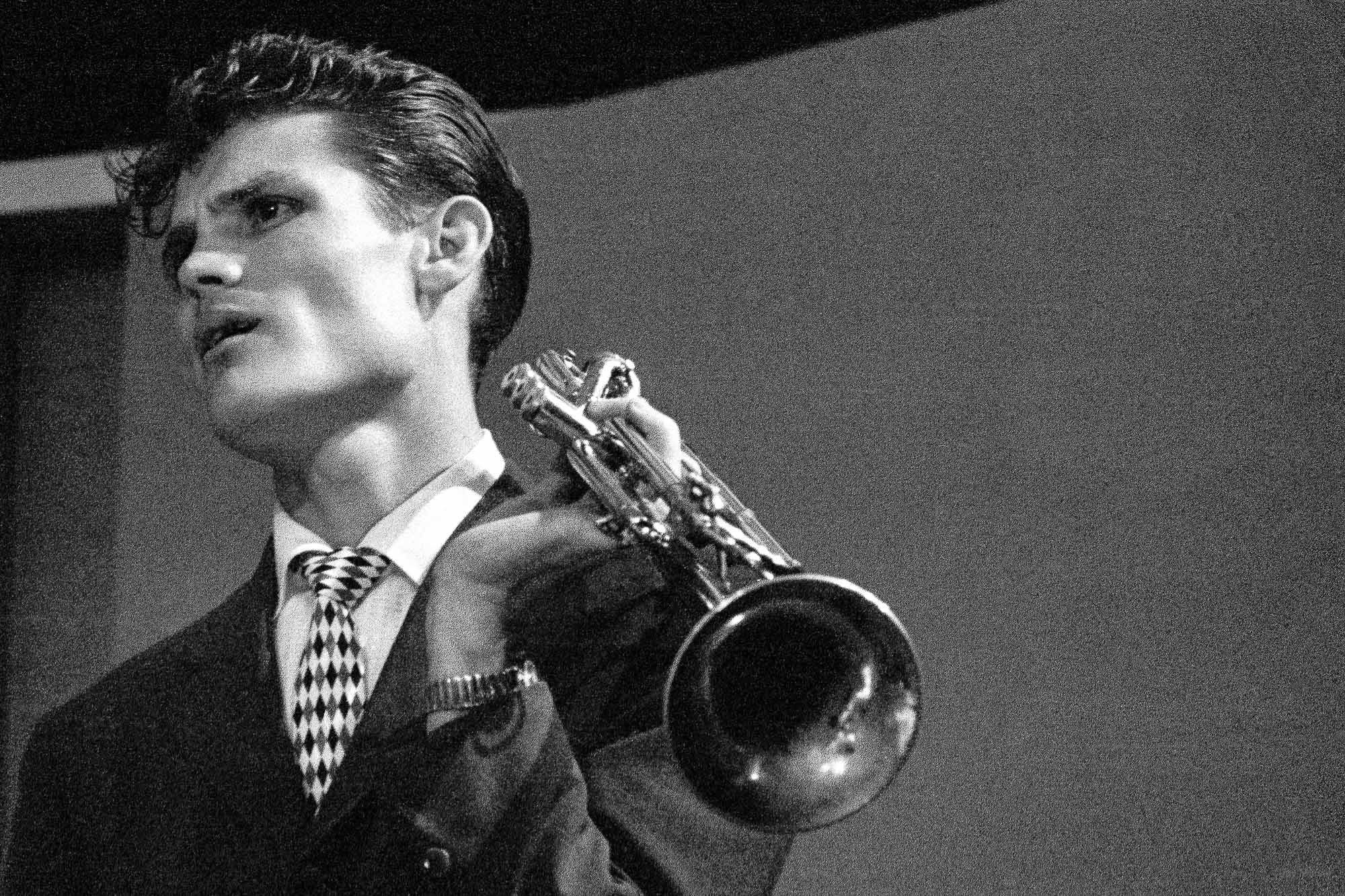
Chet Baker, NYC
Chet Baker, NYC

åÊ

åÊ

Print Info
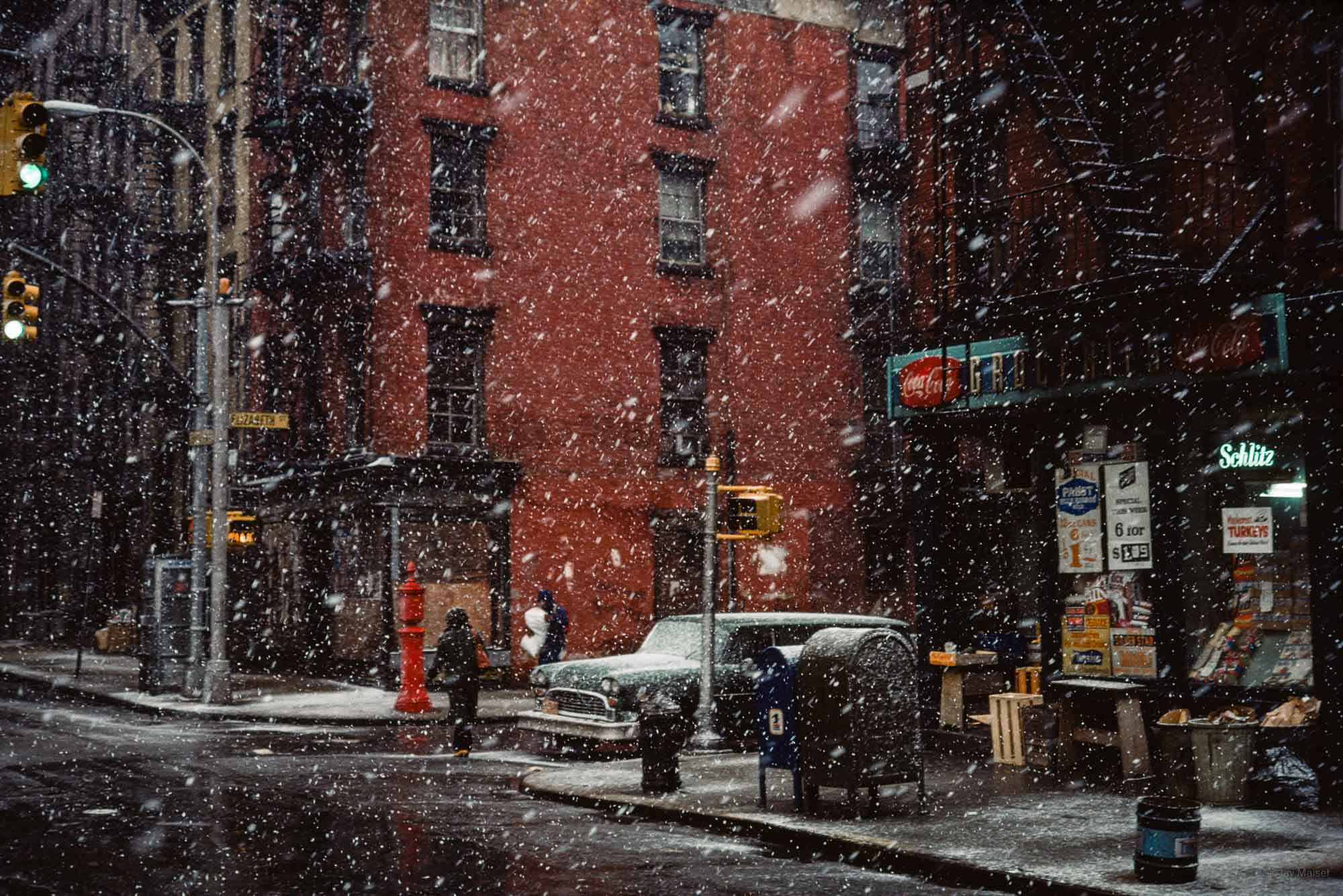
First Snow, Elizabeth Street, NYC
Print Info
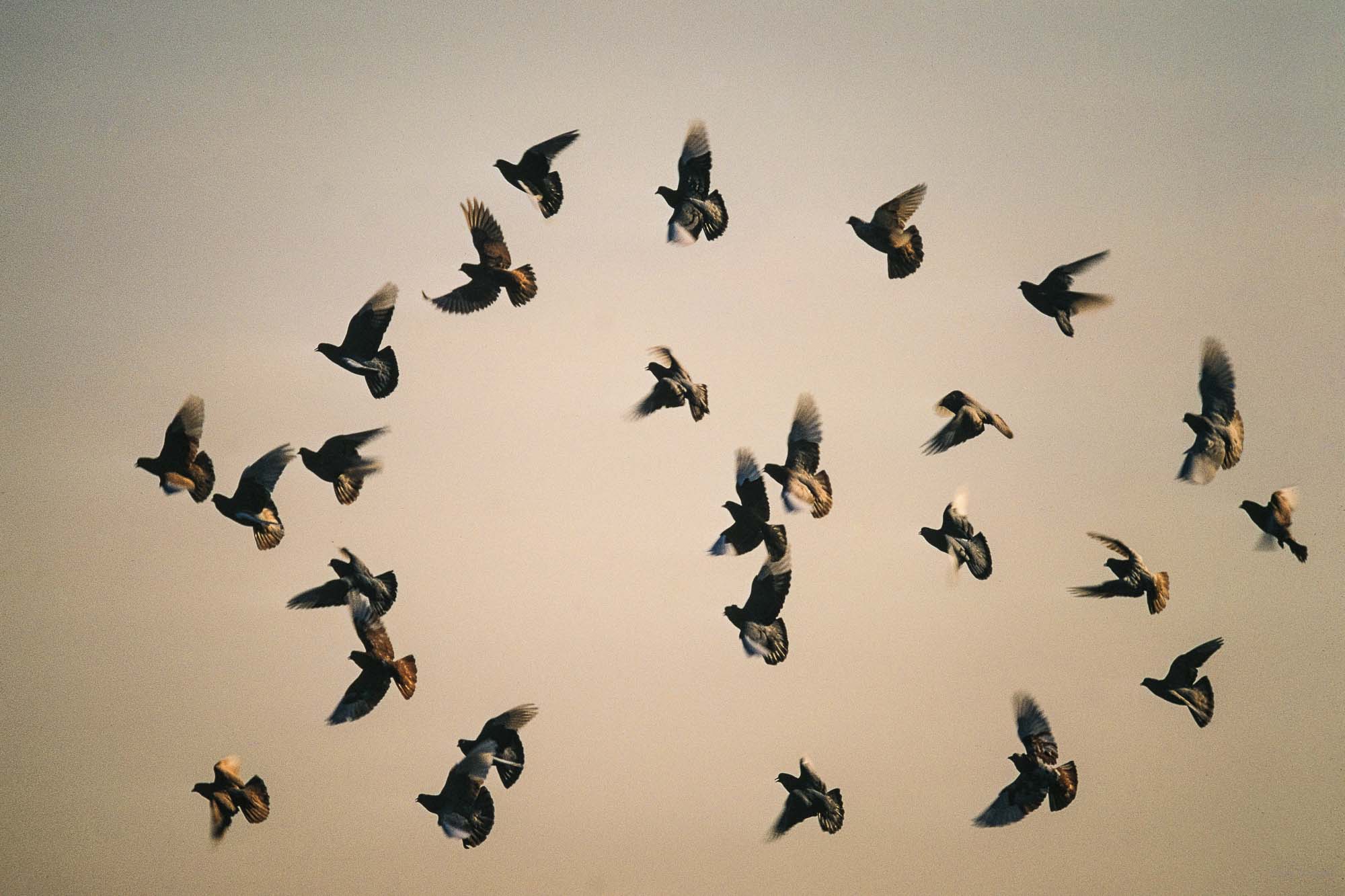
Flock of Birds, NYC
Flock of Birds, NYC


Print Info
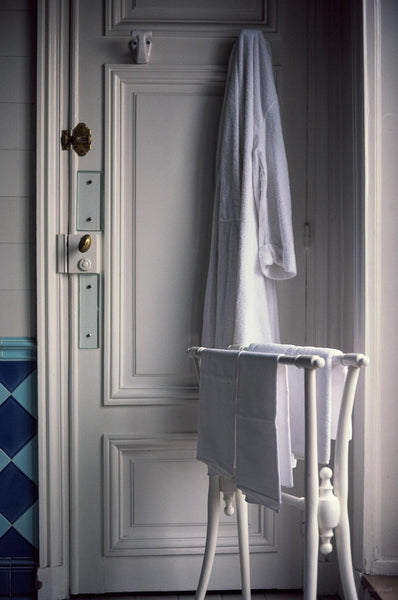
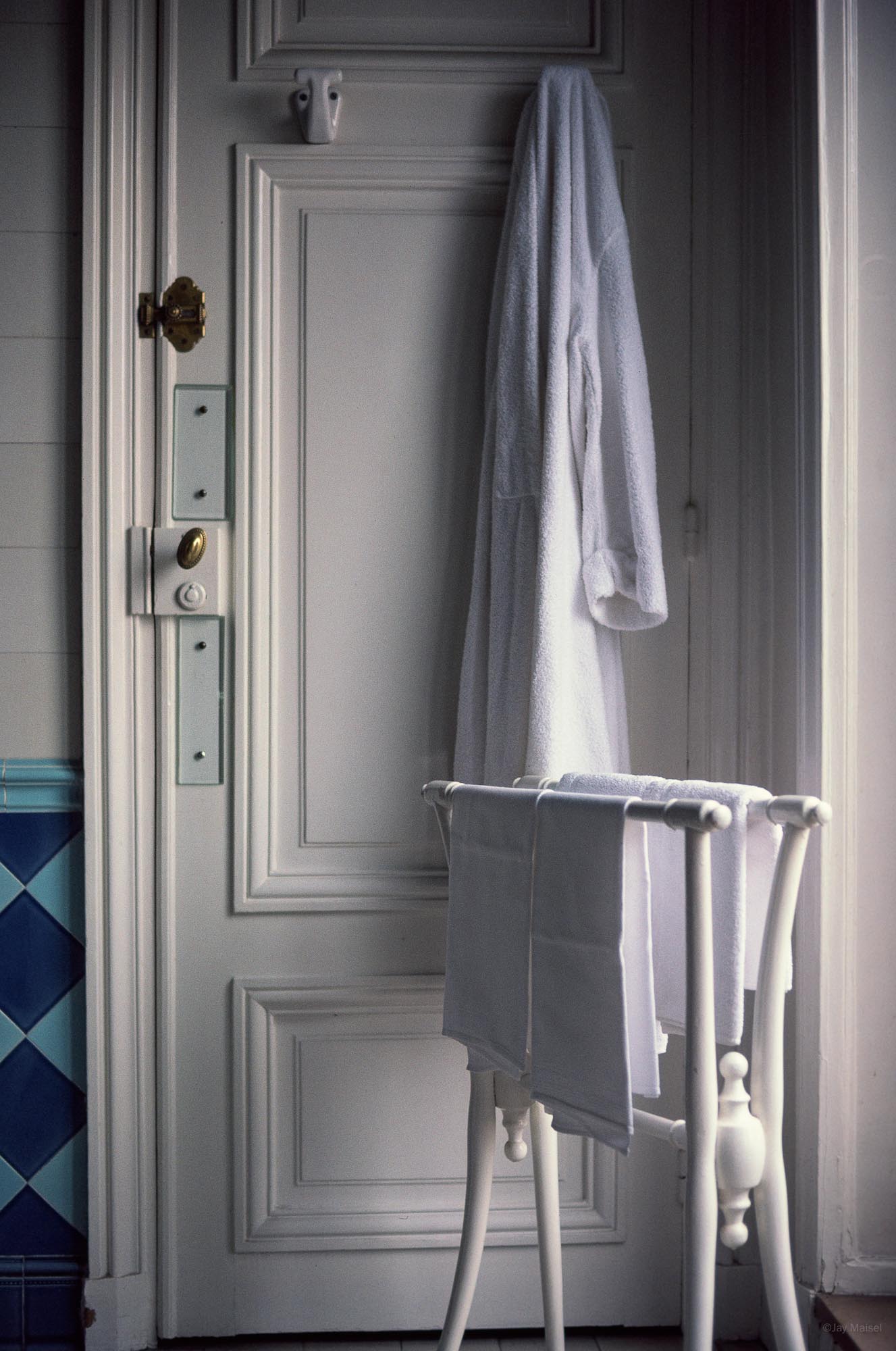
Hotel Bathroom, Paris

Excerpt from Light Gesture and Color:

Leonardo Da Vinci said that the only time we see true color is between dawn and sunrise or between sunset and dusk. He claimed that the sun altered and influenced light as it moved across the sky.

If you look at what Monet did as he painted the haystacks during the course of the day, he was illustrating this fact as his subjects changed color as he worked on each painting. In the picture of the girl with the halo reflected from the bicycle, we have light that is momentary and fleeting. Painters love to work with north light, the light which is unchanging.

A photographer told me north light looked better the longer you looked at it. I realized later he was trying to explain the ability to really study north light, the ability to spend time looking at color and light which would not change.

I was in Paris in a friend’s hotel room. I had to go to the bathroom (that’s another constant). I walked in and there it was. The light was gorgeous, and it was north light. By the way for the first few years I was in business most of my photographs of people were all shot with window light, probably north light. I didn’t know how to use artificial ights.

Print Info
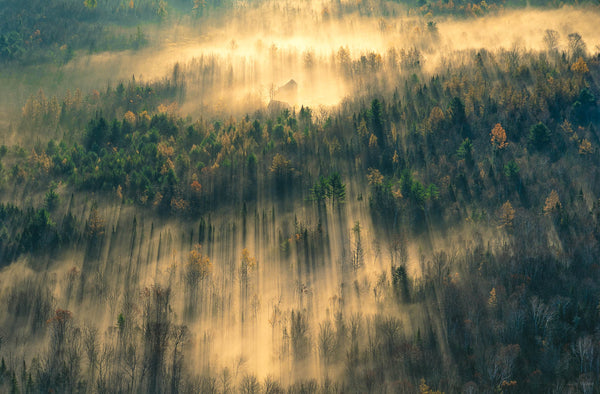
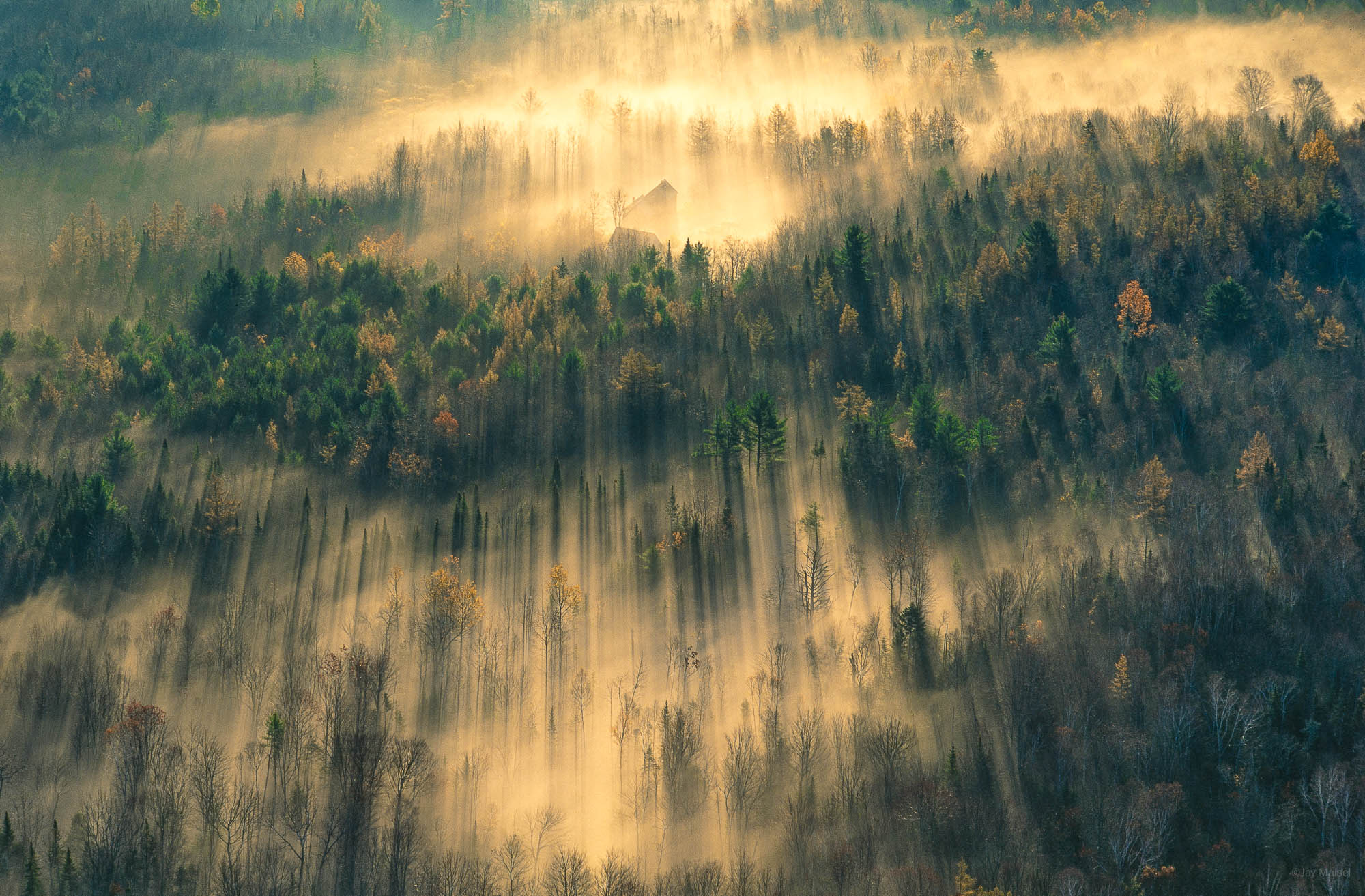
Trees, Maine
Trees, Maine

Excerpt from Light Gesture and Color:

When I was in the helicopter at dawn in Maine and saw this, I was beyond excited. IåÊwas also curious to see what it looked like from the opposite point of view, but the dealåÊis shoot what you see now. Don‰۪t count on coming back.

So I shot this then I flew around to shoot the reverse. It was nothing. Flew back to thisåÊshot and the wonderful light was gone.

I‰۪m glad I looked at the other viewpoint, it‰۪s my obligation.åÊAlways shoot it now. It won‰۪t be the same when you go back.

You must not think of yourself as looking at the ‰ÛÏstage‰۝ from the audience. You muståÊthink of it as theatre in the round and look at it from all sides.

Print Info
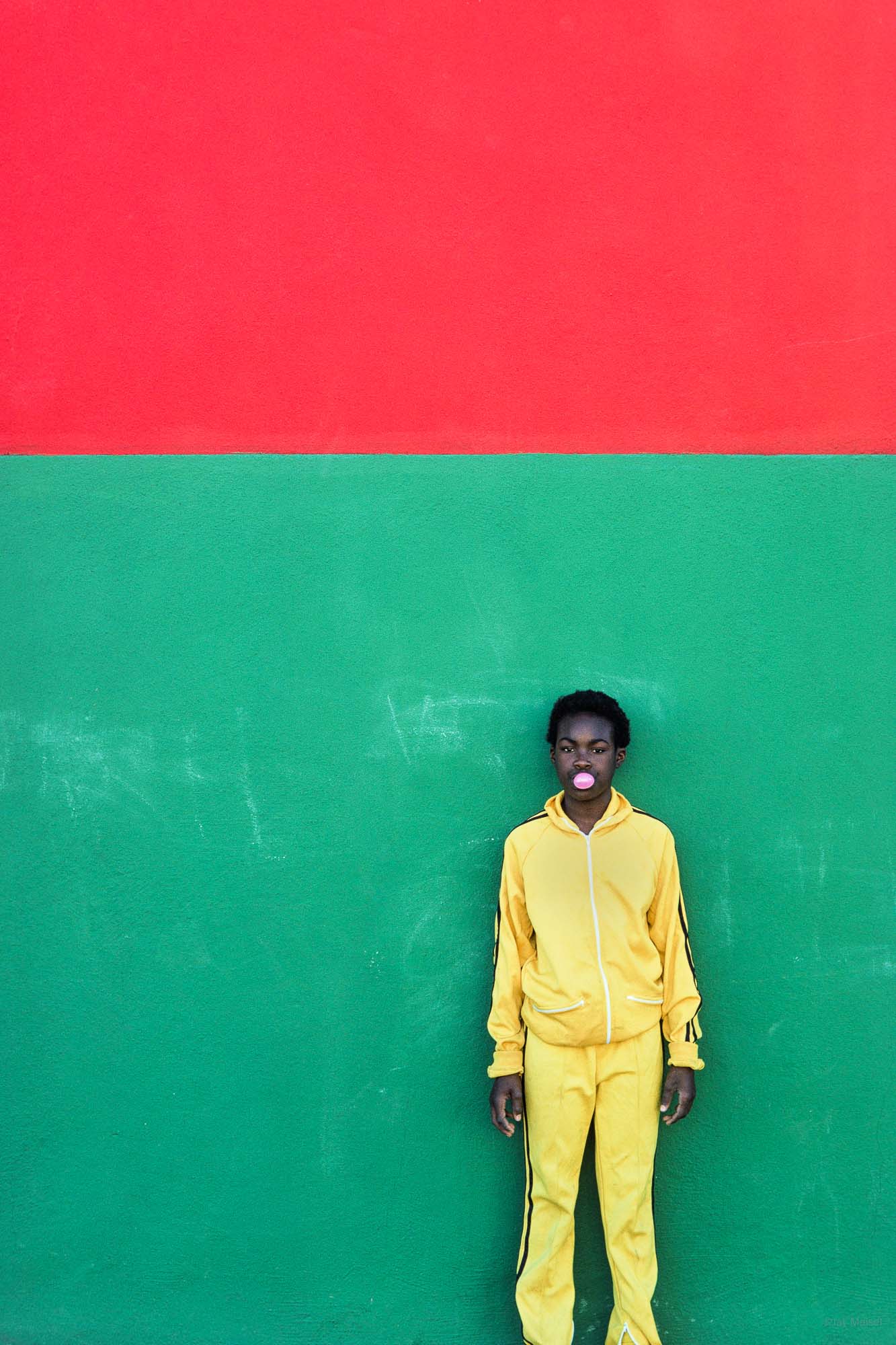
Red, Green, Yellow
Red, Green, Yellow
The famous French photographer Doisneau has been quoted as saying “I find the stage and the players will come.” Brilliant! This is what happened with even more serendipity than I dared to hope for. I saw the red and green wall, and started photographing in various exposures, croppings, etc. Out of nowhere came this wonderful young girl in her yellow outfit. She walked in, posed for me, and as a final gift, she blew the pink bubble (gum).
Print Info
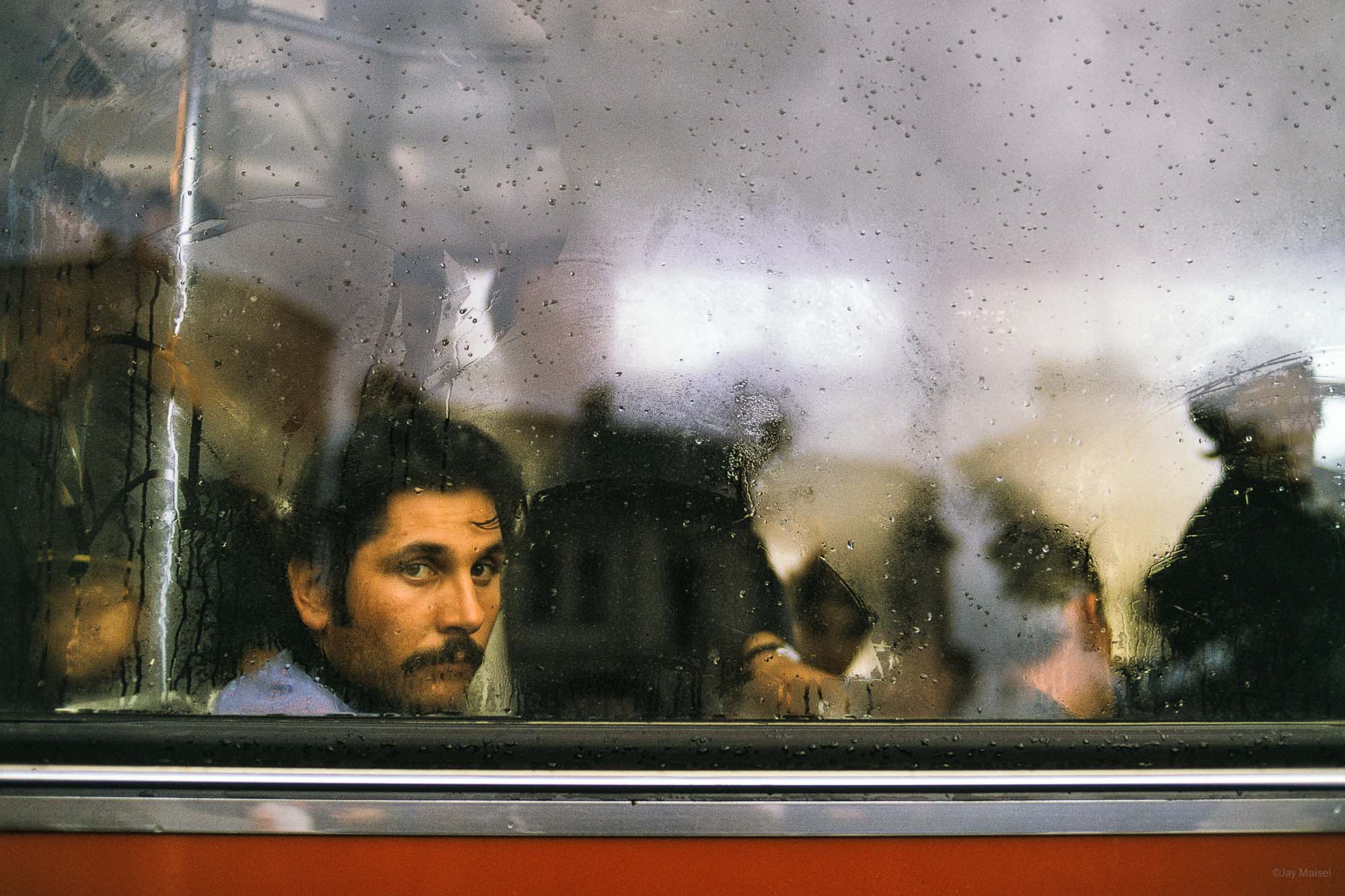
Man on Bus, Romania
Man on Bus, Romania
Print Info
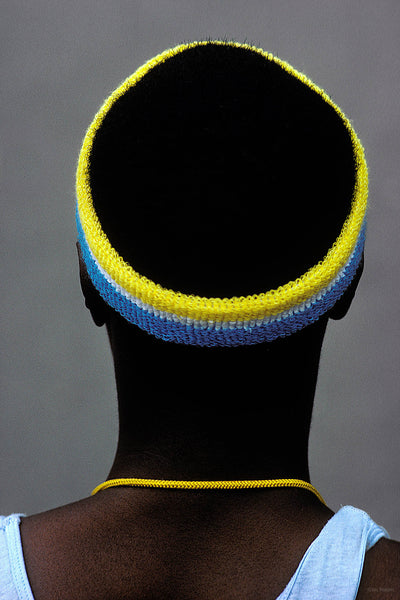
Man with Headband
Man with Headband

Excerpt from Not About the F-Stop:

Arthur Meyerson, a very good Houston, Texas, photographer, is a buddy of mine. At one point he offered me his studio for an exhibit of my images for FotoFest in Houston. This was an exhibit of 85 images. Another friend of mine, Gary Winter, was doing a video on me. He’s one of these guys who doesn’t intrude when he’s shooting—a real “fly on the wall” type—so when he asks a question, it’s a rare occurrence.

“So, Jay,” he said, “What’s the reason you picked these particular 85 pictures for this show?”

“They’re my favorites.”

“I was hoping for something a little more insightful and articulate, ” he replied.

I thought about it and realized after looking at one particular image what was behind my choices. I explained that when I shot “Man with Headband,” I was anxious, even terrified, because I knew all the things that could go wrong. It was like a litany: “Please don’t let the light change,” Please don’t let somebody walk in front of him,” “Please don’t let him turn around.” I realized at that point that each and every picture in the show was a variation of this. A moment charged with all the things that move me, and the fear of losing it. The apprehension, the near certainty that something or someone, if not myself, was going to compromise the image.

There is an emotional seesaw on perceiving what you think is a great image. It moves between glee and trepidation. The more excited I am, the better the image, the more naked emotion I feel, the more exhilaration there is, the more it is counterbalanced by the certainty that something is going to f*¢% this up.

This anxiety never happens with pictures that are less compelling or less emotional. It never happens with pictures that are intellectually motivated or studies, or with pictures that are about information, history, or pure documentation.

Print Info
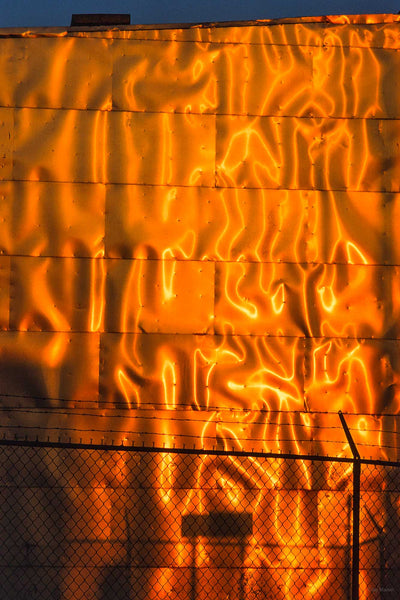
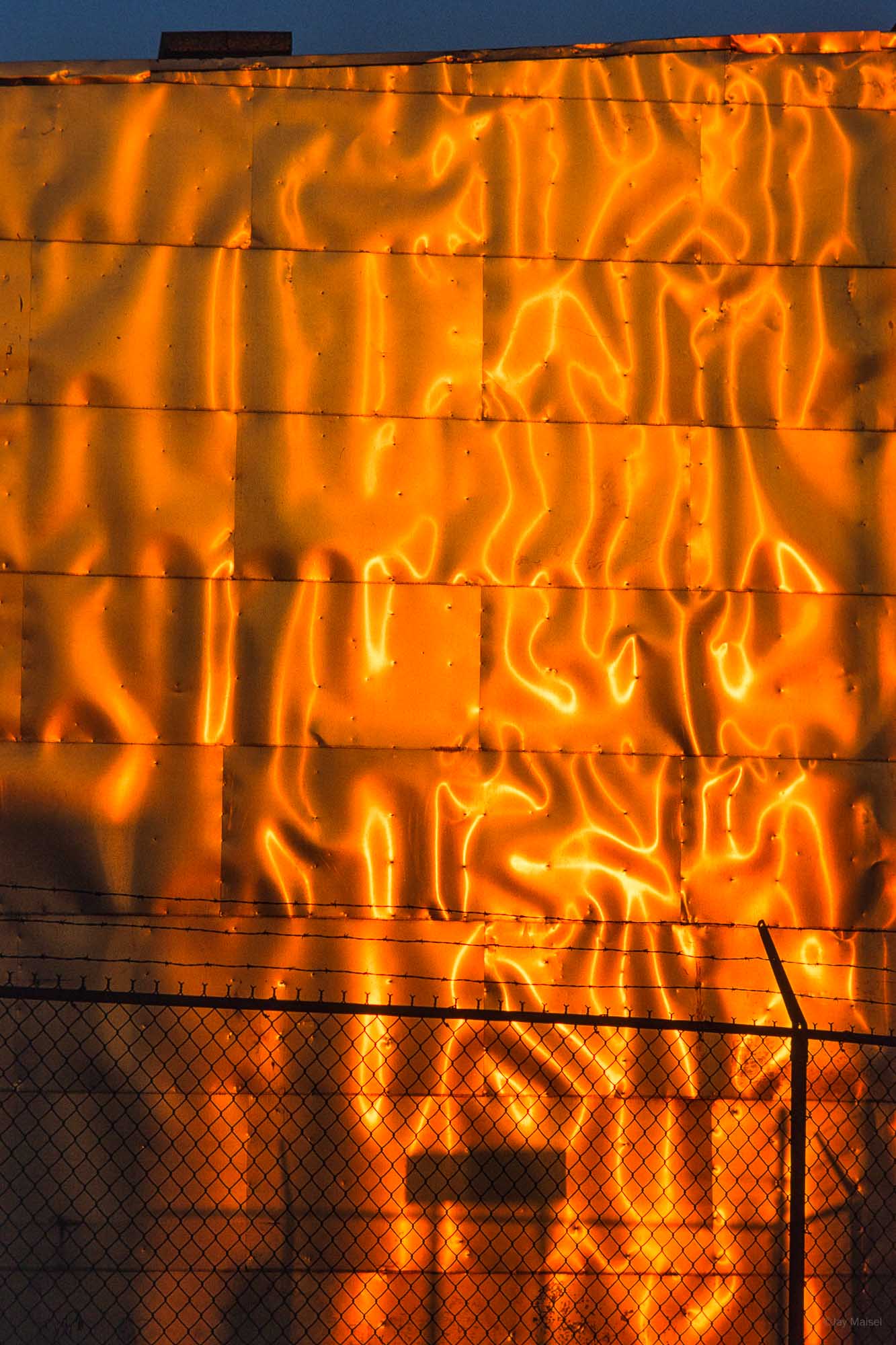
Light on Aluminum Wall, NYC

Exceprt from Light, Gesture and Color:

I was driving around Queens, on of the five buroughs of New York City. There was not a lot that caught my eye. 

Suddenly, this did!

It stopped me dead in my tracks. It was such a perfect abstraction of light, and yet it came from a wholly logical cause and effect. It was elegant, it was self-contained, a formal facade infinitely varied and completely mesmerizing.

The shimmering, gleaming surface, reflecting not other buildings but the pure light itself, with the light revealing the form of the surface itself.

Print Info
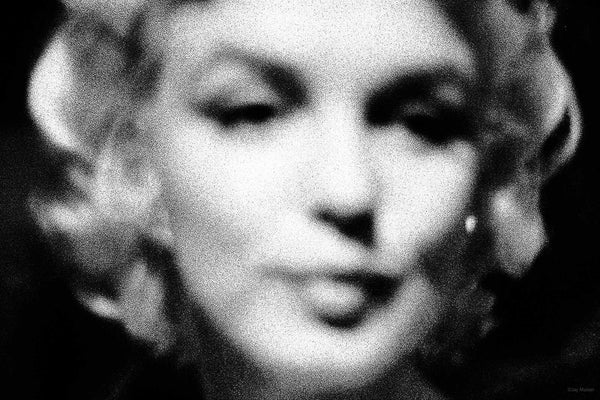
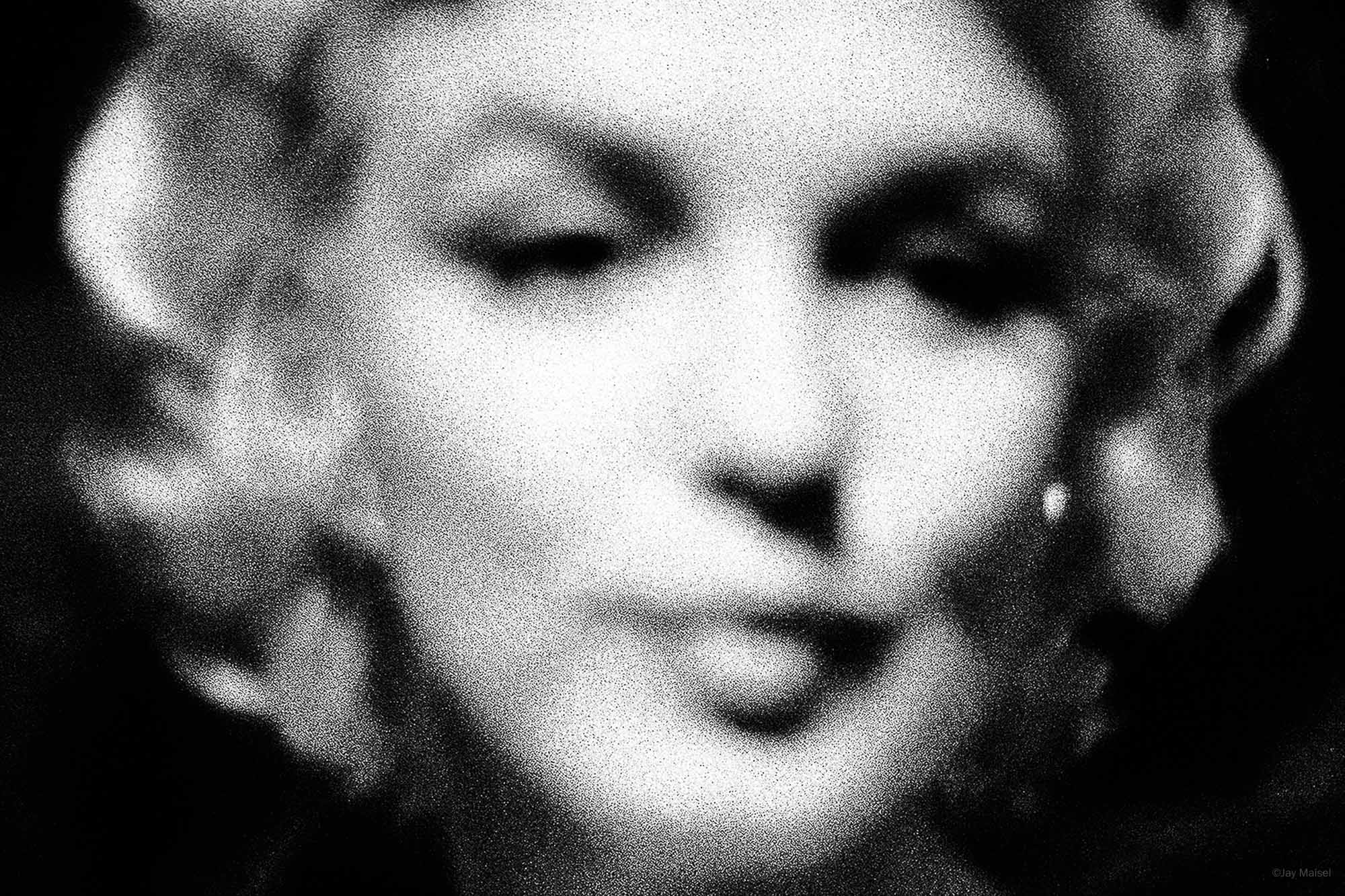
Marylin Monroe, NYC
Marylin Monroe, NYC

 Excerpt from Not About the F-Stop:

This picture was taken on my first assignment for a national magazine.

I want to set the scene: It was 1954 and I was 23 years old. Marilyn Monroe was at the zenith of her career. Sammy Davis Jr. had come back from having lost an eye and was dancing, singing, and acting his way across the color line and into America’s heart.

My assignment was a simple one: go to an after-party. The event was the premiere of East of Eden  with James Dean. Cover the party; come back with pictures of people at the festivities. Make ’em look good, and kid…don’t f*¢% up.

When I got there, the first thing I was aware of was I was the only photographer there! The second thing was Sammy Davis Jr. playing the piano with Marilyn Monroe sitting next to him.

They were delighted with each other. He was trying to get her to sing with him, she was all little girlish in her refusal, both flirting obviously and happily with each other. And me? I was so excited, I was amazed I didn’t wet my pants. 

There were no motors back then so it was shoot, wind, shoot, wind, and all the time I’m thinking, “Oh my God, this is the best.” I shot over 100 frames and the small, still voice (that overrides your lack of intelligence) said to me, “There aren’t 100 frames on that roll of film.”

Oh s#[†! I knew what that meant. I checked the take-up spool (for those of you under 40, that was the gizmo that took up the slack when you wound the film— you do remember film , don’t you?) and it wound freely. Of course that meant I was shooting with no film going through the camera. I was suicidal. I reloaded the camera, but by then Marilyn and Sammy were gone.

I tell this story to all my classes because it’s important for them to know they are not alone. Everybody screws up; it ain’t just you, and any photographer who says he hasn’t is either a liar or a guy with a bad memory.

Oh, the picture of Marilyn. I took it earlier or later that night—I have no recollection of shooting it at all. Trust your intuition. It will take you places you haven’t thought of.

This picture is an example of what I have written about elsewhere in this book. You have two chances: (1) get it in the shooting, or (2) catch it in the editing.

Though I don’t remember shooting it, I found it in the edit. I had rejected it because of the focus, but then decided I loved it.

That’s my second chance. Yours, too.

Print Info
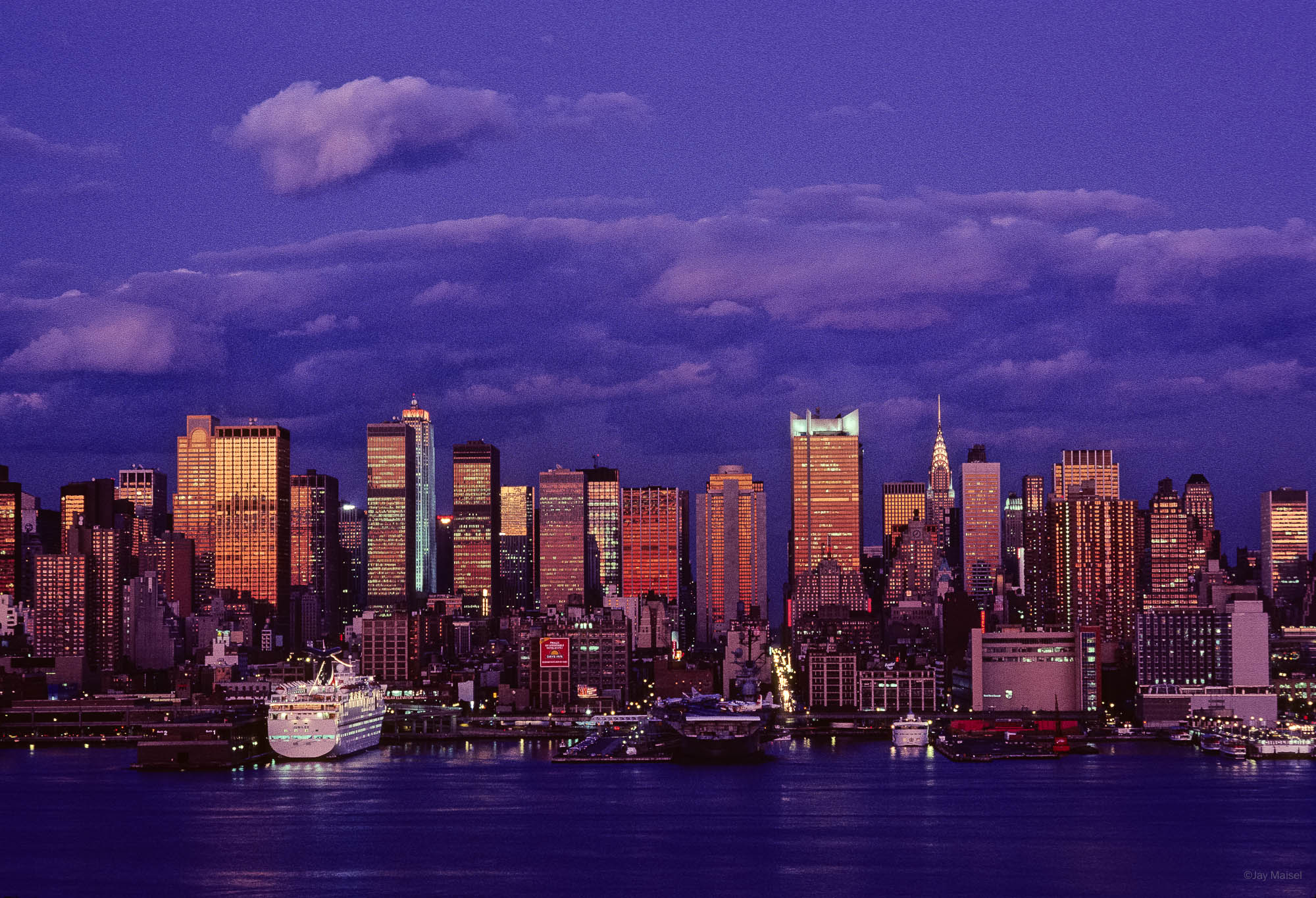
Purple Skyline, NYC
Purple Skyline, NYC
Print Info
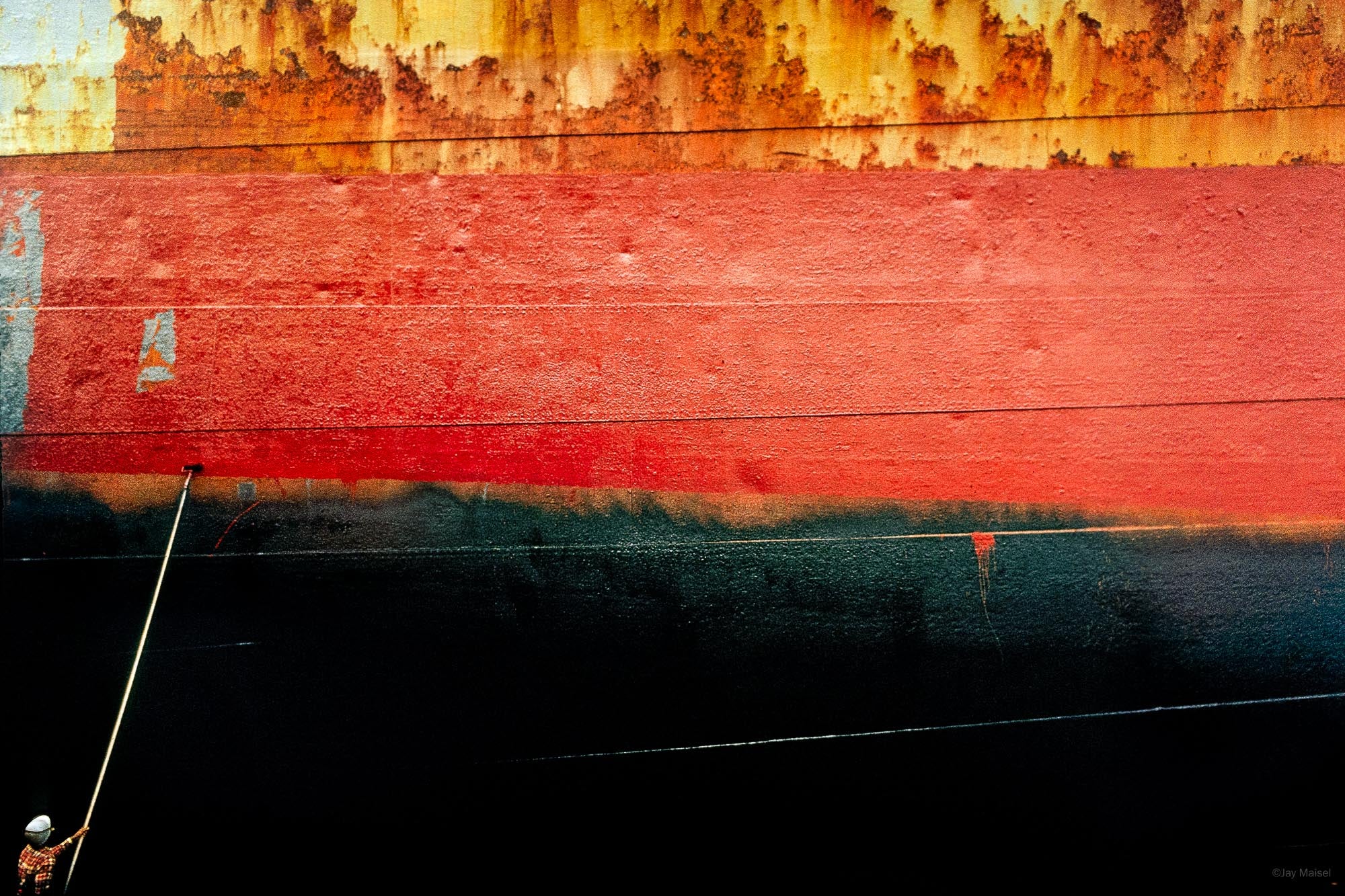
Man Painting Ship
Man Painting Ship
Print Info
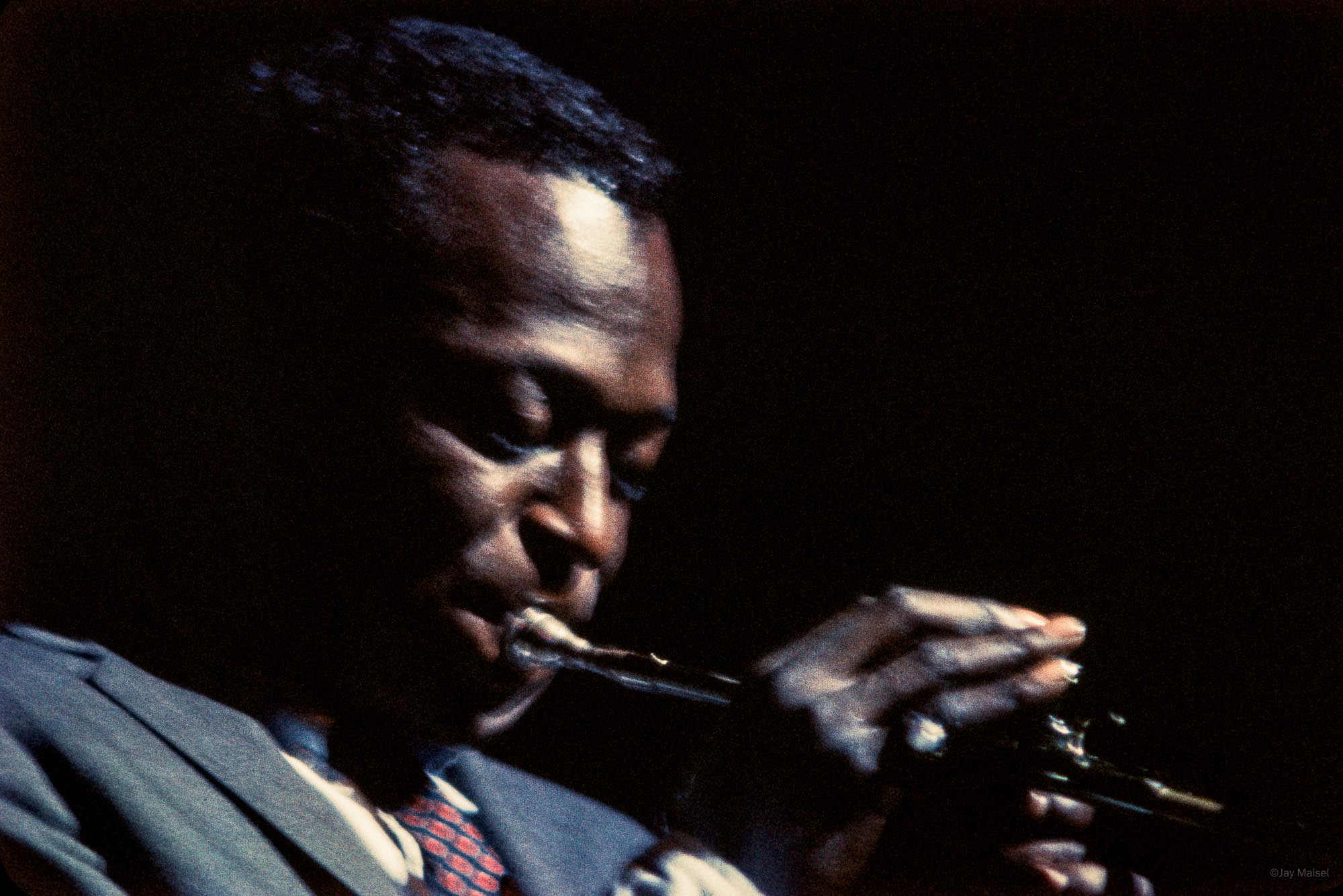
Miles Davis, Some Kind of Blue, NYC
Print Info
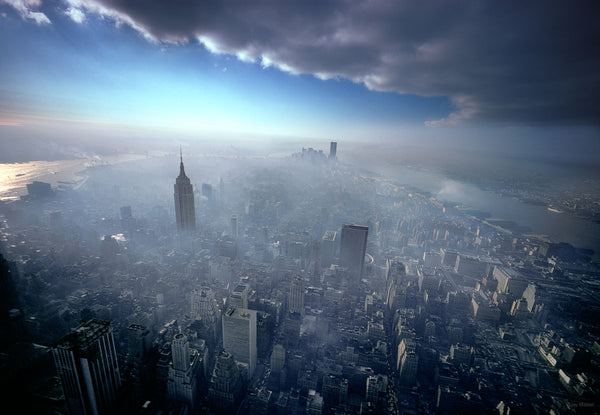
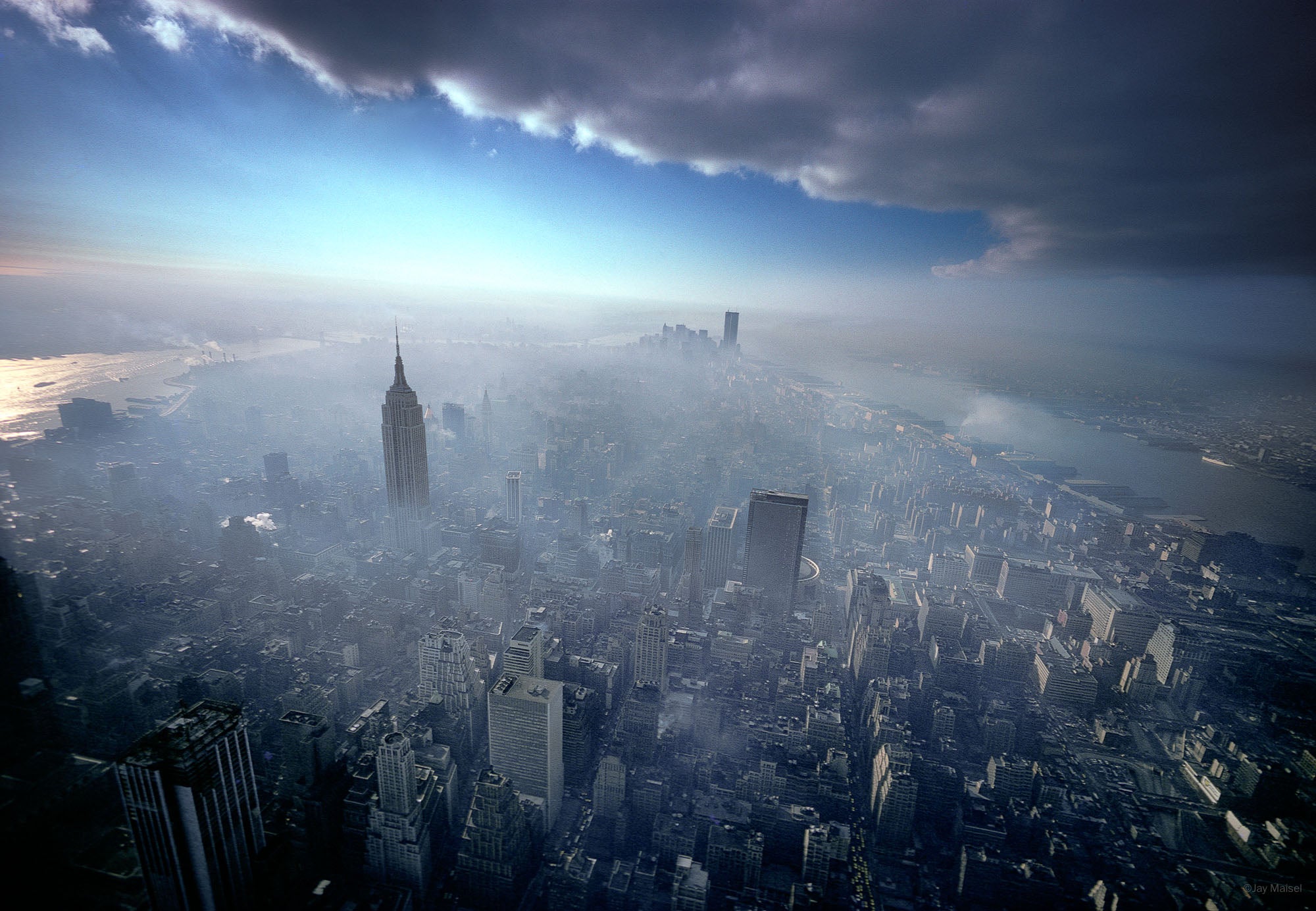
Aerial, NYC
Aerial, NYC

Excerpt from Light Gesture & Color:

Gesture can reveal the essence and character of anything from a mountain range to a mayfly.

It certainly can reveal in a moment the unique quality of a city.

Whenever I could swing it in terms of time and money I would rent a helicopter, go up and shoot.

No plan, no assignment just the kick of looking down at the city.

I have a tendency, all other things being equal, to shoot with long lenses, but on this day the clouds, the light, kind of called out for a wide angle to make my shot.

I was trying to be as inclusive as possible. I didn’t want to zero in with a tele to get one particular aspect of the city.

I wanted it all from uptown to the downtown tip of Manhattan, including the World Trade Center in the background and the Empire State Building as my anchor.

Print Info
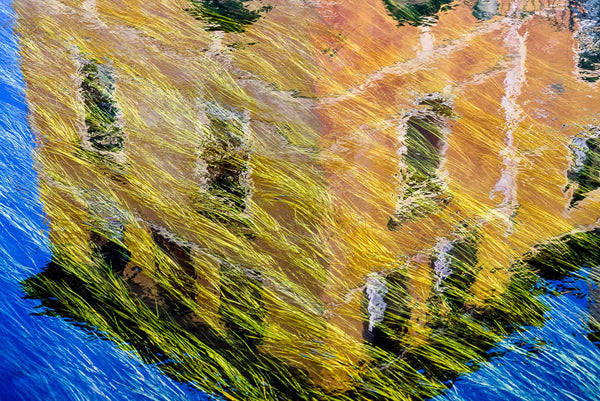
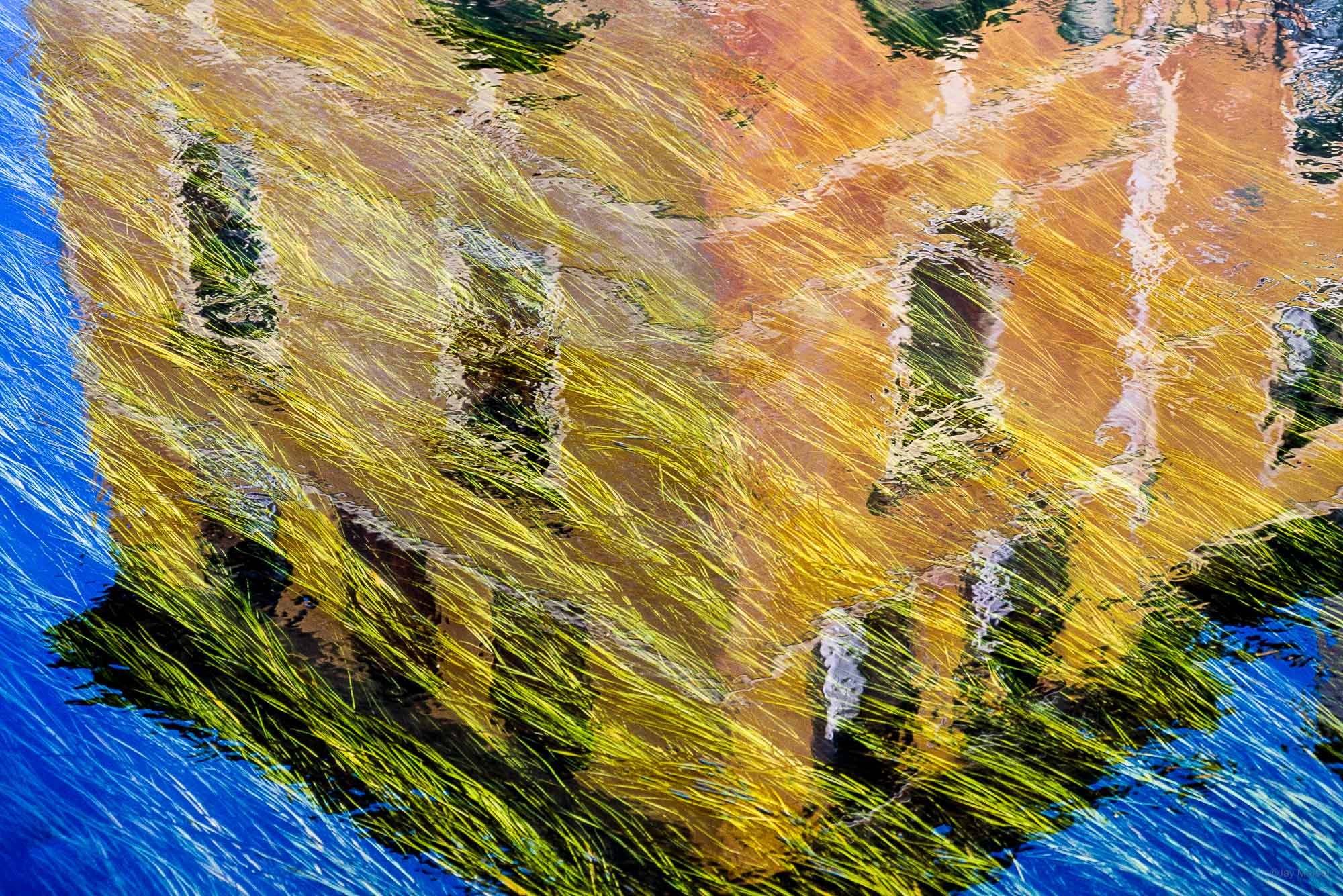
Reeds and Reflection, Vicenza

Excerpt from It's Not About the F-Stop:

I was shooting this image for a calendar. The client was a bank in Vicenza, Italy.

While I was shooting, an Italian photographer walked by and said, “It’s better down the road.” His name was Caesar Gerilometro and he was a good shooter.

Years ago, I would never have followed his advice. I would have been trapped in my own little egoistic world and I could never admit that anything or anyone could help me or tell me what do.

But I’m older now, and wiser, too. Wiser means you realize you are not as smart as you used to think you were. It also means you’ve lost the reasoning that made you feel it was cheating to be helped.

So I went down the road. It was better. I stayed quite a while shooting, enjoying the play of light, water, and reflections.

Four months later, I went back to Italy to show the client the work and called Caesar and showed it to him. He looked, and he said, “I never saw that before.” I told him I had gone exactly where he told me to go. “Yes,” he said, “but you shoot with telephoto eyes and I shoot with wide-angle eyes.” We will always be different.

Don’t worry about being helped. Your pictures will be your pictures. They won’t suffer by your heeding advice. And they probably will look different than the other guys got anyway.

Print Info
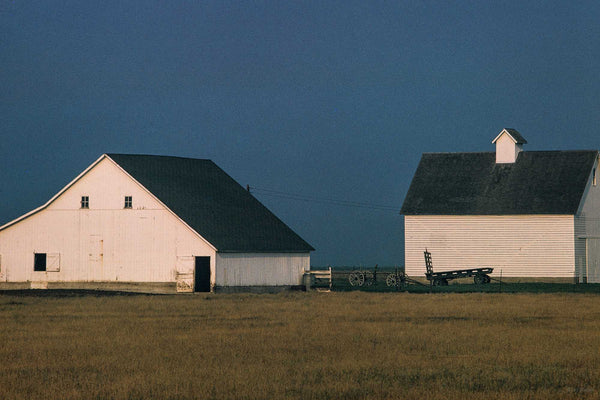
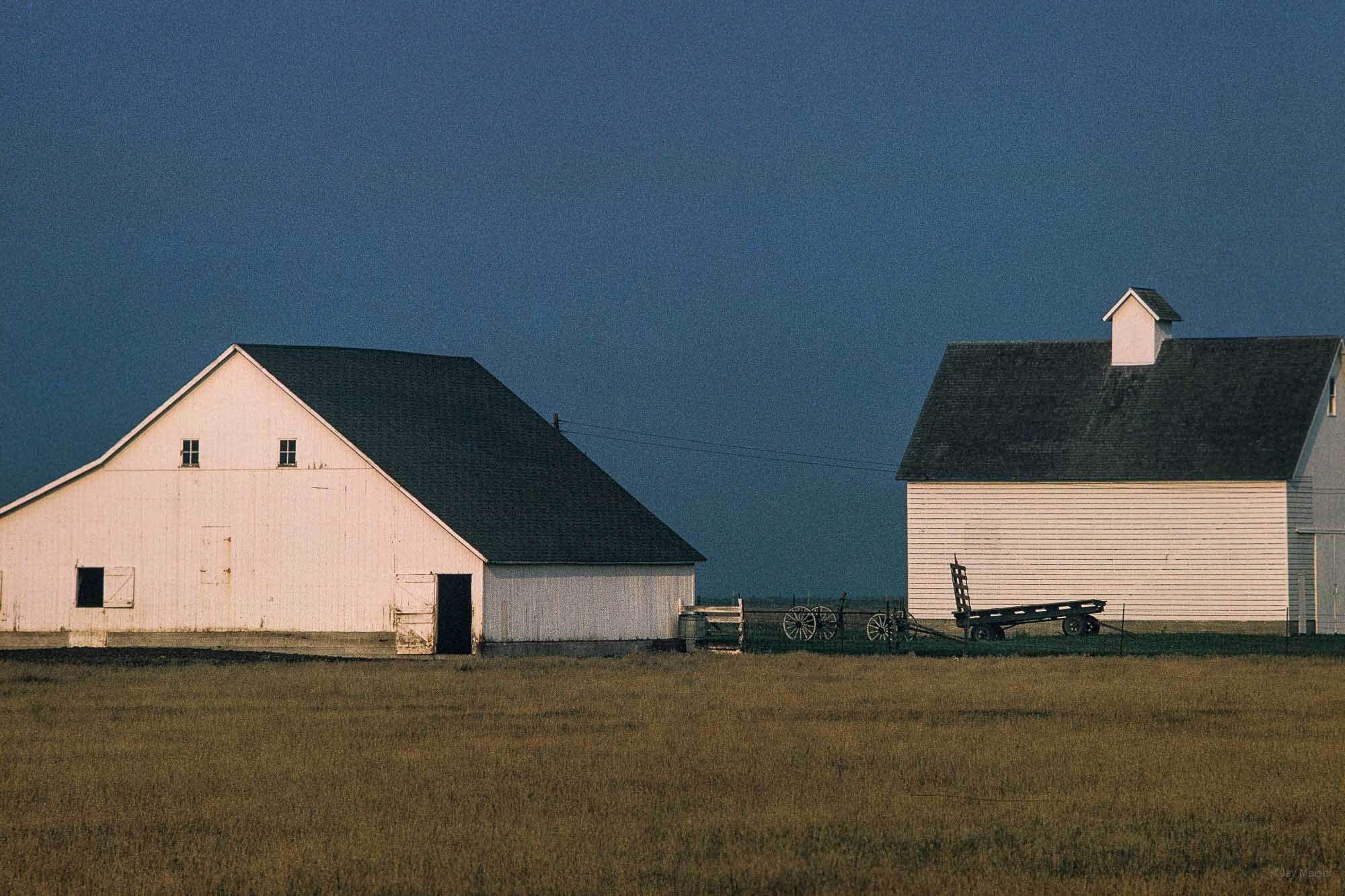
Two White Barns
Two White Barns

Excerpt from Light Gesture and Color:

As you may have figured out already, I'm really not much for keeping records of my pictures - data that other photographers try to keep.

This picture of the two white barns was taken at least 50 years ago. It has stood the test of time, and still looks good to me after all these years.

It was on of many things I shot on a cross-country car trip. When I first saw it, I felt like it had been put there for me. Ther personality, the gesture, just made me happy to look at them. The color was simple, spare, and beautiful, but it was the gesture I fell for. The light is okay, too, but it's the gesture all the way that make this sing.

Remember I mentioned I dont keep records of note? I have always wanted to go back there and shoot it again, but I never have. I got a call from an ad agency who asked me where it was. I said, "I can't tell you."

They said, "We understand, but we're prepared to pay you a very hefty location fee. We really want to do a TV commercial ising those two white barns." I didnt say, "I won't tell you. I can't, because I have no damned idea where the hell I shot it."

It might be a good idea to make some note about where things are.

I still don't, but it's a good idea.

Print Info
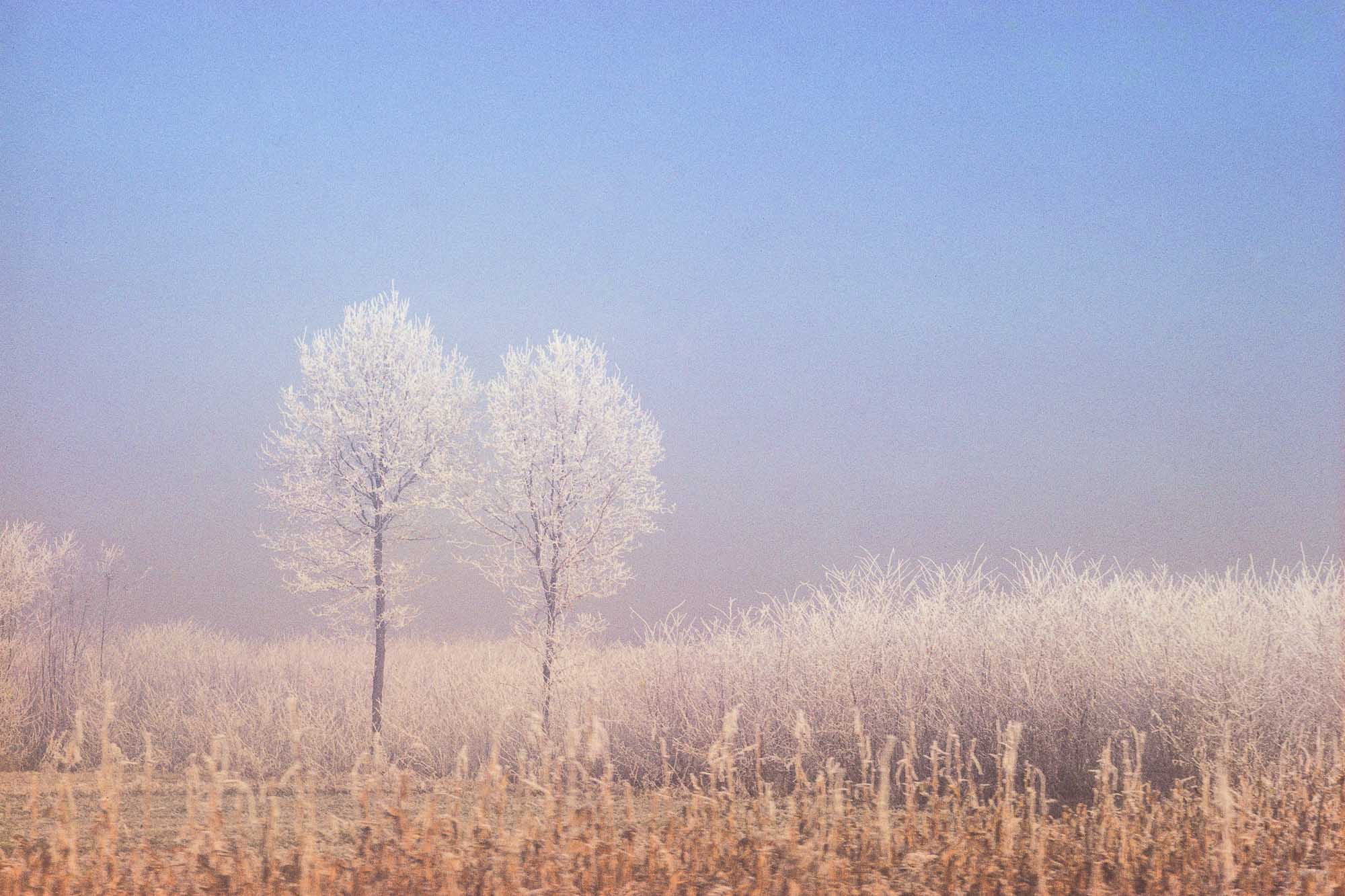
Two Trees, Milan
Two Trees, Milan
Print Info
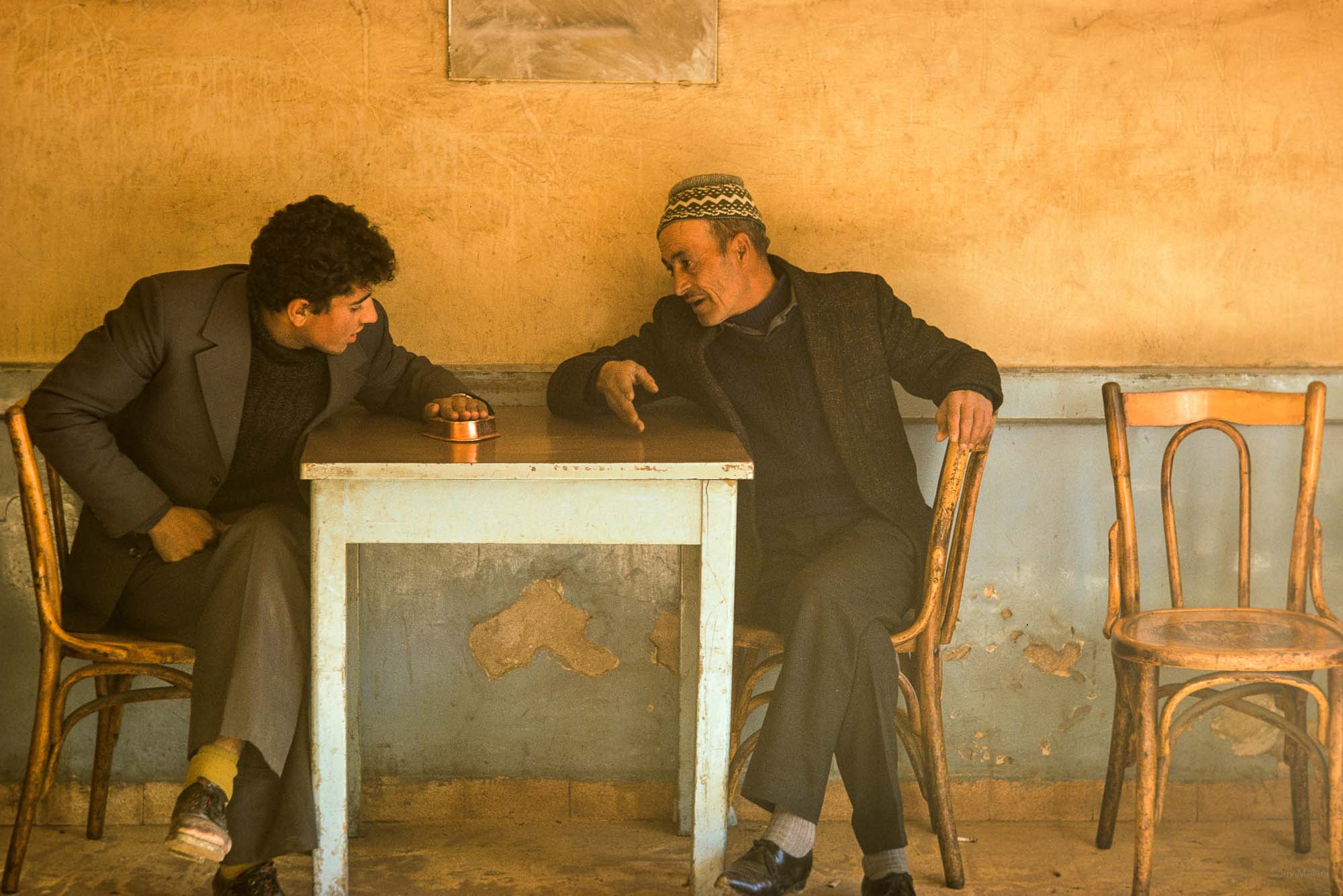
Two Men, Jerusalem
Two Men, Jerusalem
Print Info
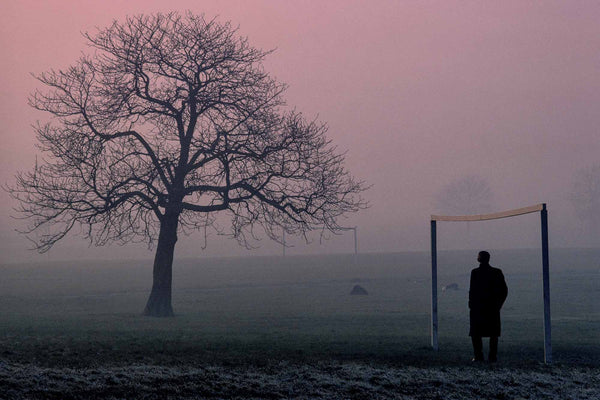
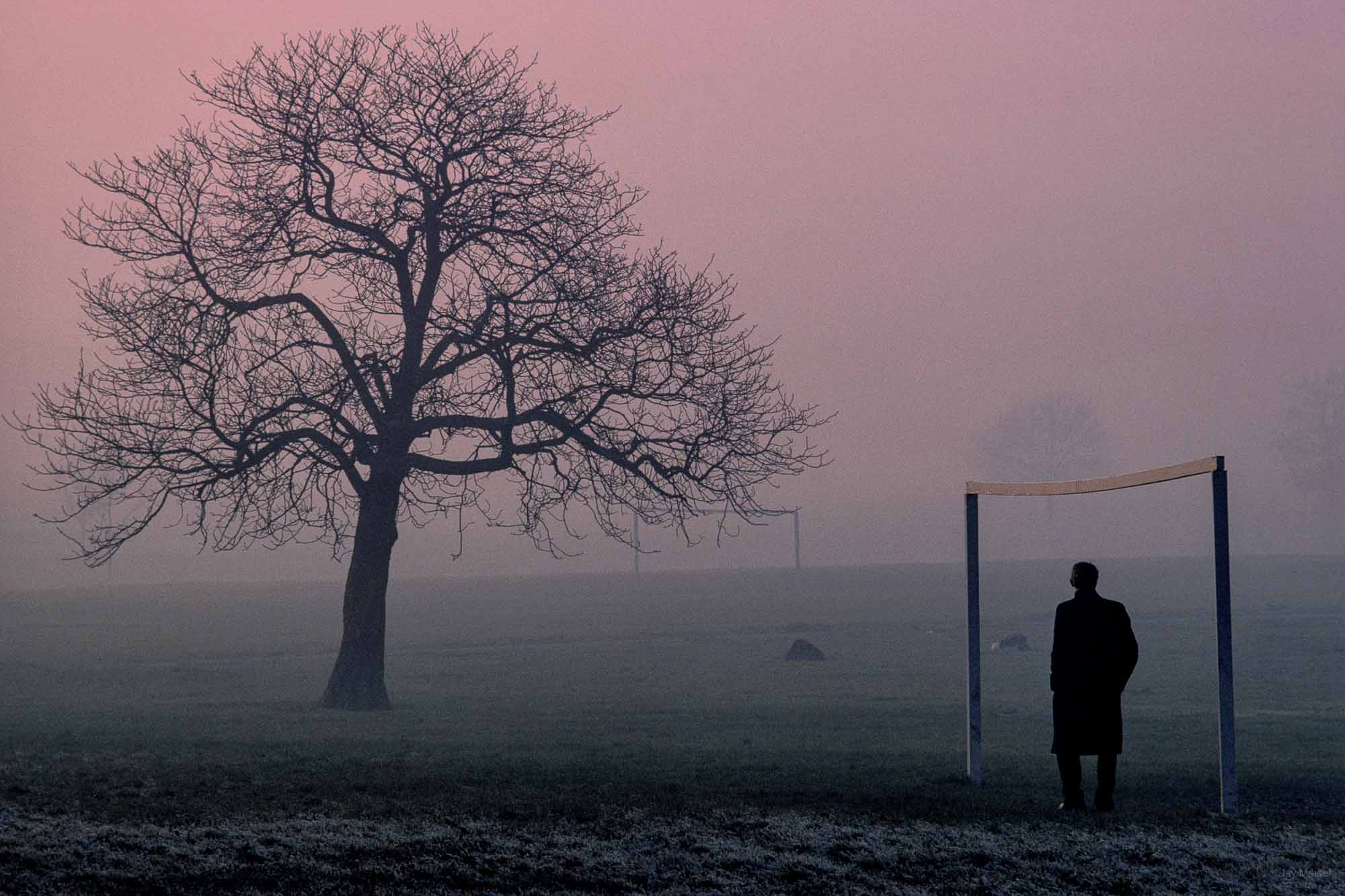
Tree, Man and Goal Post, London

Excerpt It's from Not About the F Stop: 

Sometimes there are pictures you take that you just can’t talk about. You look and—bang—that’s it. Thinking is not an integral part of the process. Intuition takes over. I’ve never had the ability to intellectualize about this kind of image. However, I can easily slip into escape mode and tell you what others have said about it. 

Phil Perkis, in Teaching Photography: Notes Assembled , said: “And how the photographer got there is indescribable and mysterious. It stops dead in their tracks, those who would explain the whole business for us and make logical and predictable the content of photographs.” Ernst Haas said that we don’t take pictures, we are taken by pictures.

I was trying to explain this kind of image when I wrote: “I was walking along, minding my business….” Suddenly, I realized I was quoting the wonderful Nat King Cole song, and it explained how I felt about the whole question:

“I was walking along, minding my business

 When out of an orange-colored sky 

Flash! Bam! Ala-ka-zam! 

Wonderful you came by”

That’s about it. If you are fortunate enough to be open to what’s in your field of vision, something wonderful happens. The most memorable and touching photographs are inexplicable both in their motivation and execution.

They are not about the photographer’s conscious desire to go out and shoot this or that. It’s the other way around. The photographer is waylaid (or “taken”) by this amazing juxtaposition of form and content in front of them that leaves them with no choice but to shoot. There is no, “That would make a nice photo.” There is no, “I ought to take a photo of that.” There is no intellectual analysis. The event cries out to be recorded. You respond, and your response is visceral and instinctive and intuitive.

The photograph is not the result of the clicking of the camera, but of all the years of your life up to the moment you take the picture.

Therefore, on the following pages are a series of images that I hope will be beautiful, touching, and provocative for you.

I leave you with the following thought: If the picture speaks for itself, let it. 

As for the unanswered questions, one of the things that I’ve always loved about Henri Cartier Bresson’s work, and the thing that separates some photos from others, is that some photos don’t tell you things, but rather, ask questions or stimulate thought.

Could mere answers ever be more rewarding than that?

Print Info
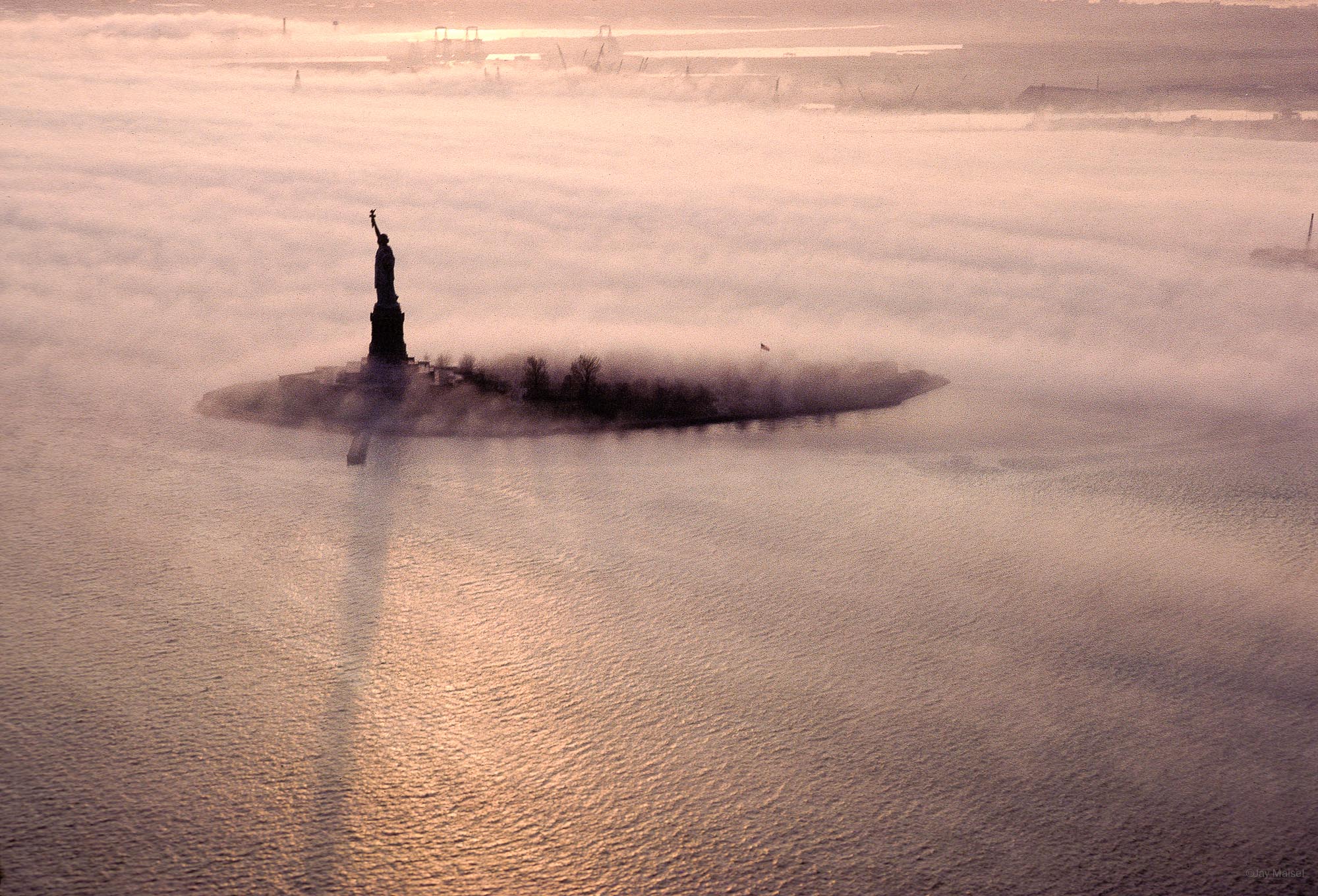
Statue of Liberty in Mist, NYC
Print Info
Inner Tube Boy
Inner Tube Boy
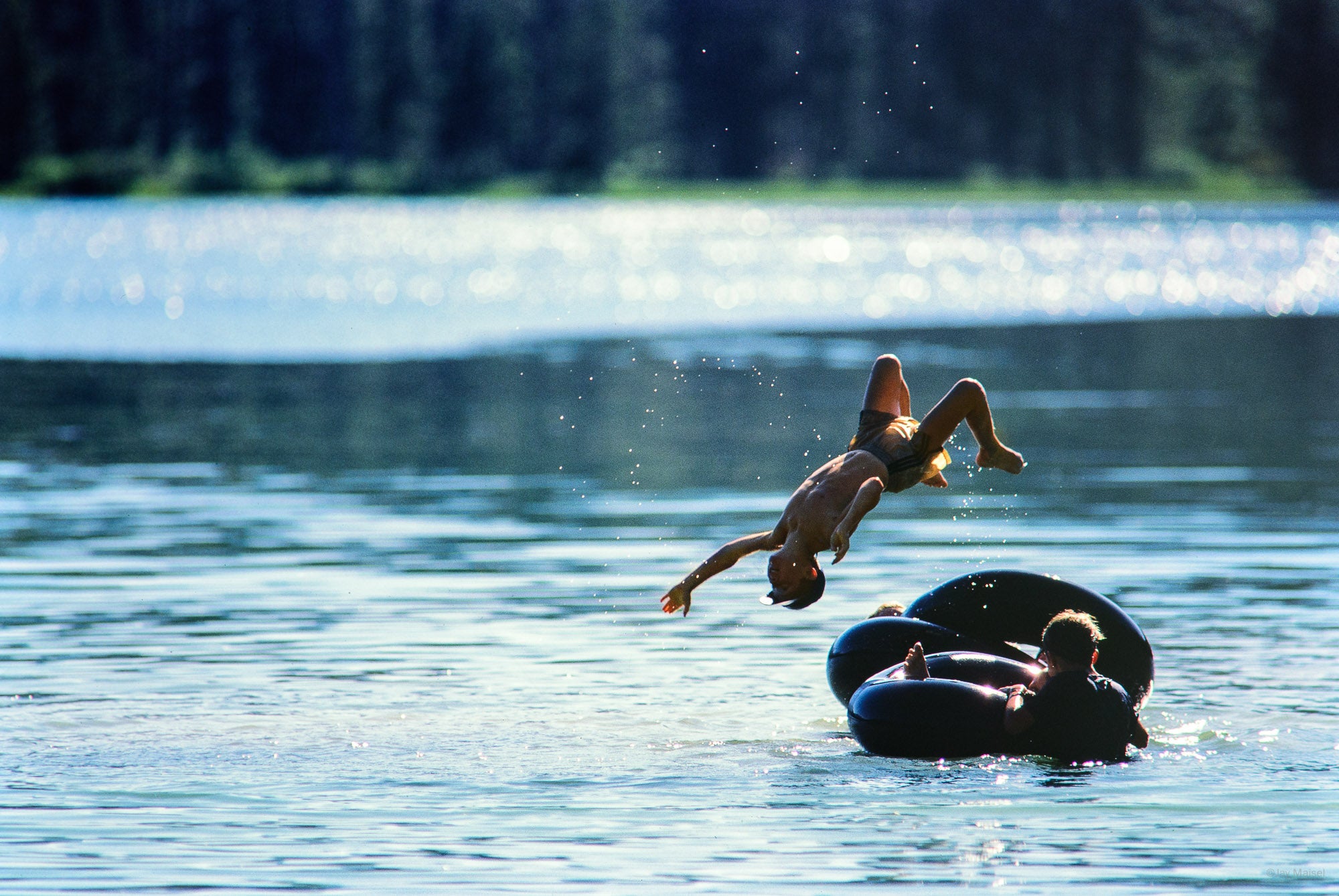
This was shot for a car company on the theme of Americana.  I know, there’s no car, but this was about America as a corollary aspect of the shoot. I try to direct as a little as possible: set up the action, let the kids have a good time, stay open and shoot what seems most true, most dramatic. A kid upside down in mid-air seemed perfect to me.
Print Info
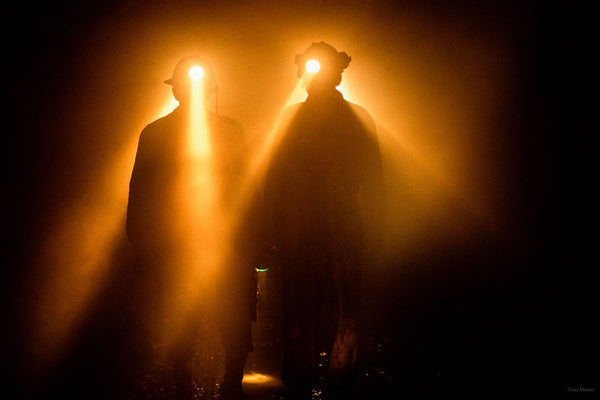
Two Miners
Two Miners

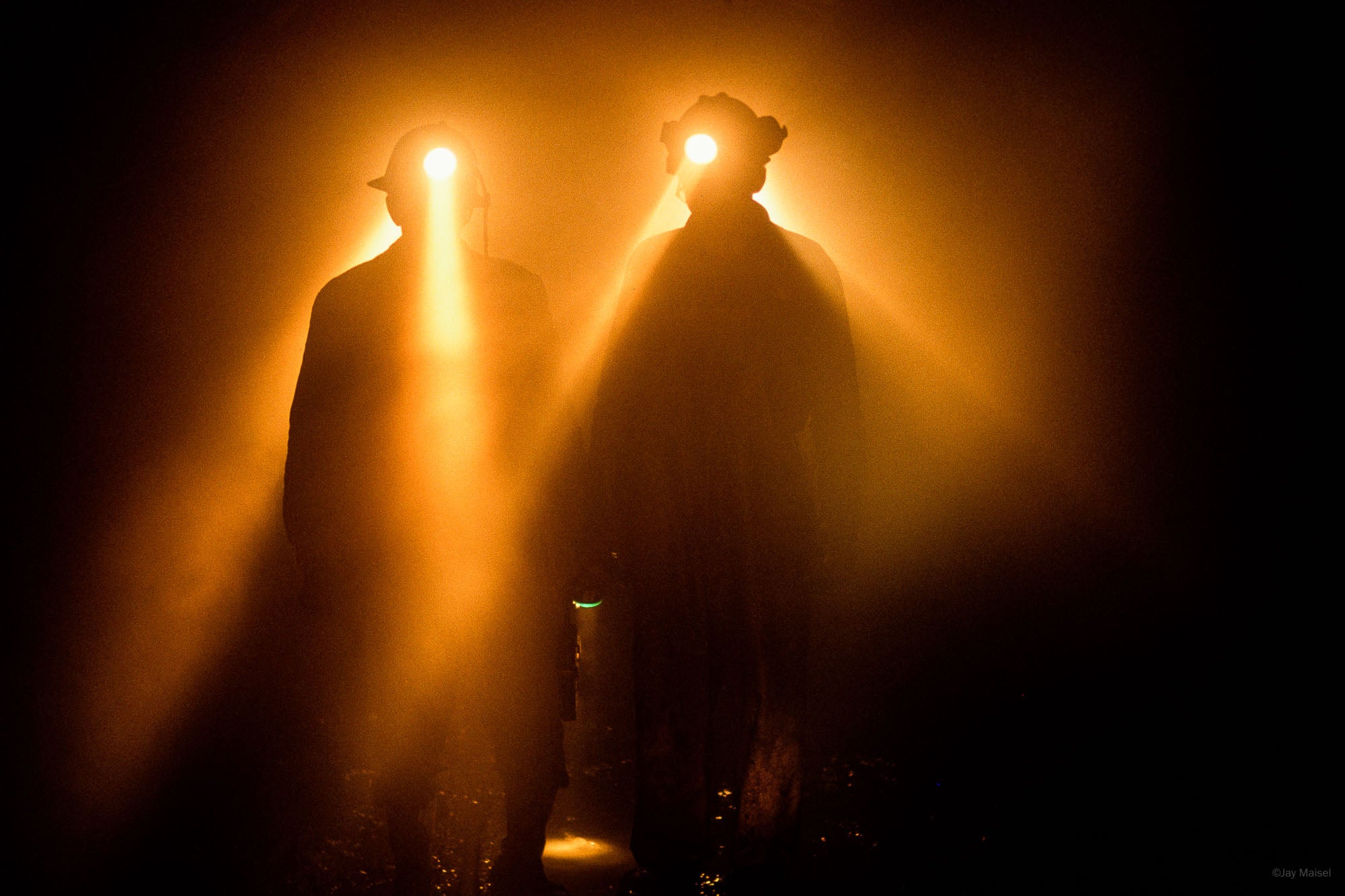
Excerpt It's from Not About the F Stop: 

This is one of the few times I’ve consciously repeated myself. I had been sent to do a photograph in a coal mine. What sticks in my mind is that we worked around down in the mines for a photograph and the pickings were slim. If you’ve ever been in a mine, you know what I mean.

In any case, we finally found a rock face in which they were inserting sticks of dynamite. There were wires and technical paraphernalia all over the place. It was chaotic and bizarre. I loved it.

When I did commercial work, I always worked with an assistant and I carried strobes with me. I told the assistant to set up the strobes so we would have raking light on the surface. That’s what I wanted.

While he was doing that, I was picking through my lenses to figure out which one to use. At this point, I have to tell you we had descended about a mile deep and then walked about three-quarters of a mile from the elevator into one of the fingers of the mine.

I picked the lens I wanted. The miners told me, “Be quick. We got to blast this in 20 minutes to stay on schedule.” My assistant, who had set up the stands for the strobe lights, walked over to me in said in a faint whisper, “I’m sorry, but I forgot the strobe head.”

I turned to the client and said “On second thought, strobe lighting is going to destroy the quality of this shot, I’m going to shoot it without lights.” Then I told my assistant to pack it up.

As we left the shoot and headed toward the next possible shot, we came back to the elevator and the assistant whispered again, “Since you can’t use the strobes, can I just leave it here? We’ll pick it up later.” 

I smiled with what must’ve been an evil smile and said “I don’t want to embarrass you by letting the client know you f*¢%ed up. Just carry it with you the rest of the day.”

We couldn’t find much worth shooting. I was looking at the miners with their lights built into their helmets and thought, “Thank God! I’ve got an idea.” I said to the client, “I need four guys for the shot I want to do. I also need one of your machines to go back and forth to raise as much dust as possible.”

Once we raised the dust, I put two miners behind the other two. They backlit the front guys by lighting up the dust, and silhouetted the two in front, who also had their headlamps on, and that was the picture. I bracketed the hell out of it. It took all of two minutes, we coughed our way out and that was the shot they used as a cover.

Several years later, a different mine, different client. This guy wants a picture of “machine 3926.” This is a mine where you can’t use lights at all and machine 3926 is about 60 feet of shiny steel alternating with pitch darkness.

I took one look and said, “No f*¢%ing way am I going to waste my time with that.” “I saw your last annual report and whoever did shoot it was a genius because he got a beautiful shot of it and there’s no point in doing it again, but worse.”

I said, “Don’t worry, I’m going to give you a better shot. I need four guys with headlamps,” etc. He answers, “But there will be no equipment.”

I tell him, “Look, you’ll love it and you’ll look great for doing it.”

I shot it, and the brass loved it. It won all kinds of awards, they used it for the cover,
and he came out smelling like a rose.

And, to tell the truth, I have no idea in which of the two mines I shot this.

Print Info
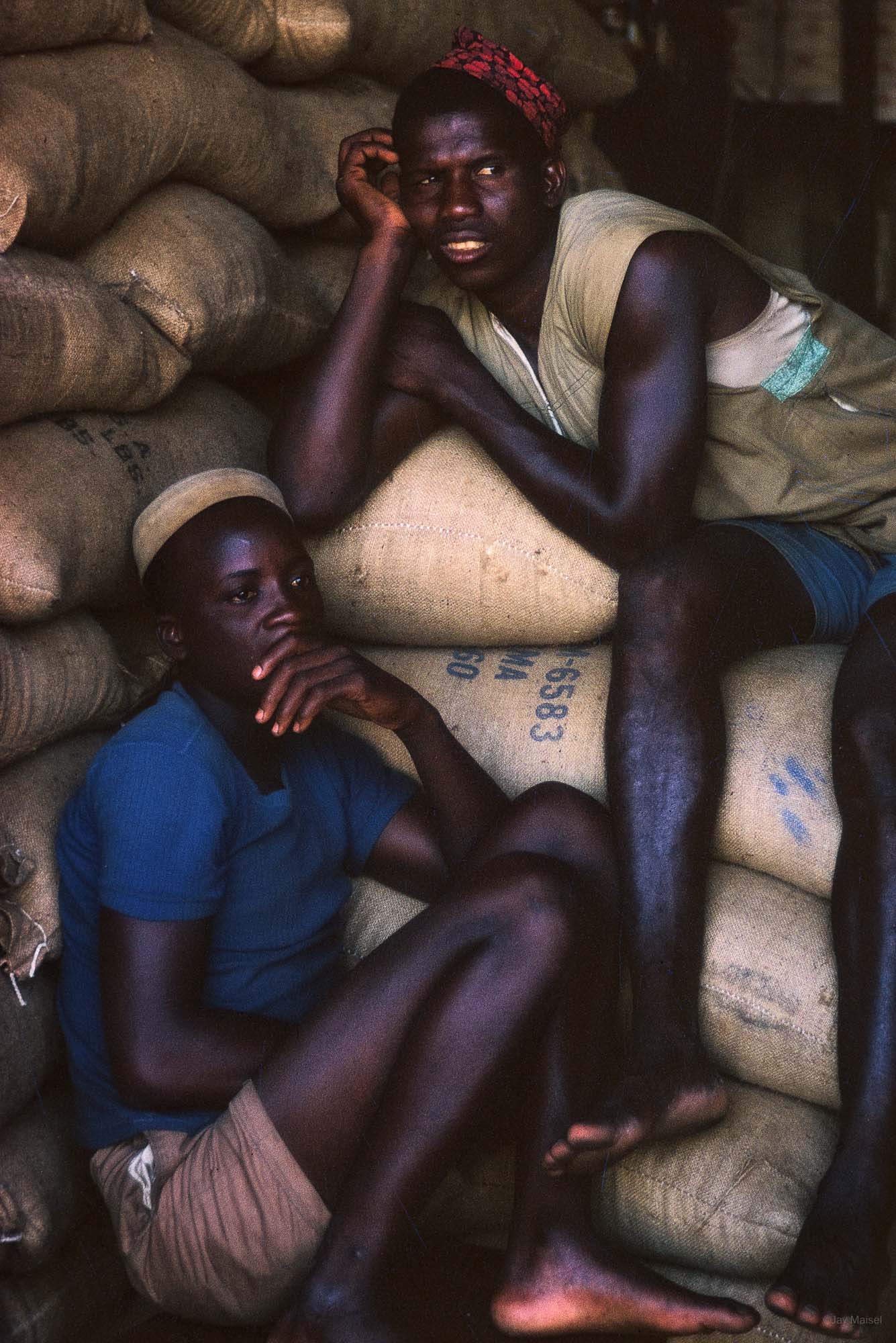
Two Men, Ghana
Two Men, Ghana
Print Info
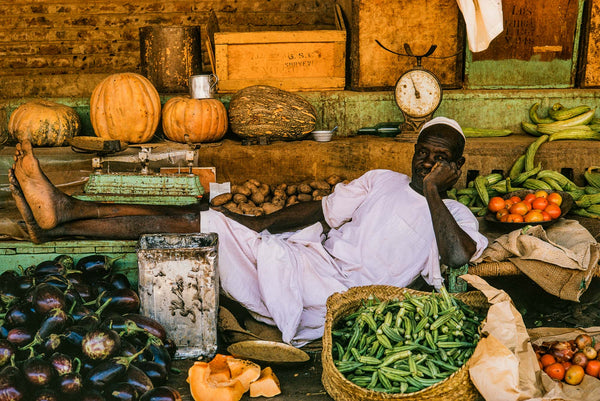
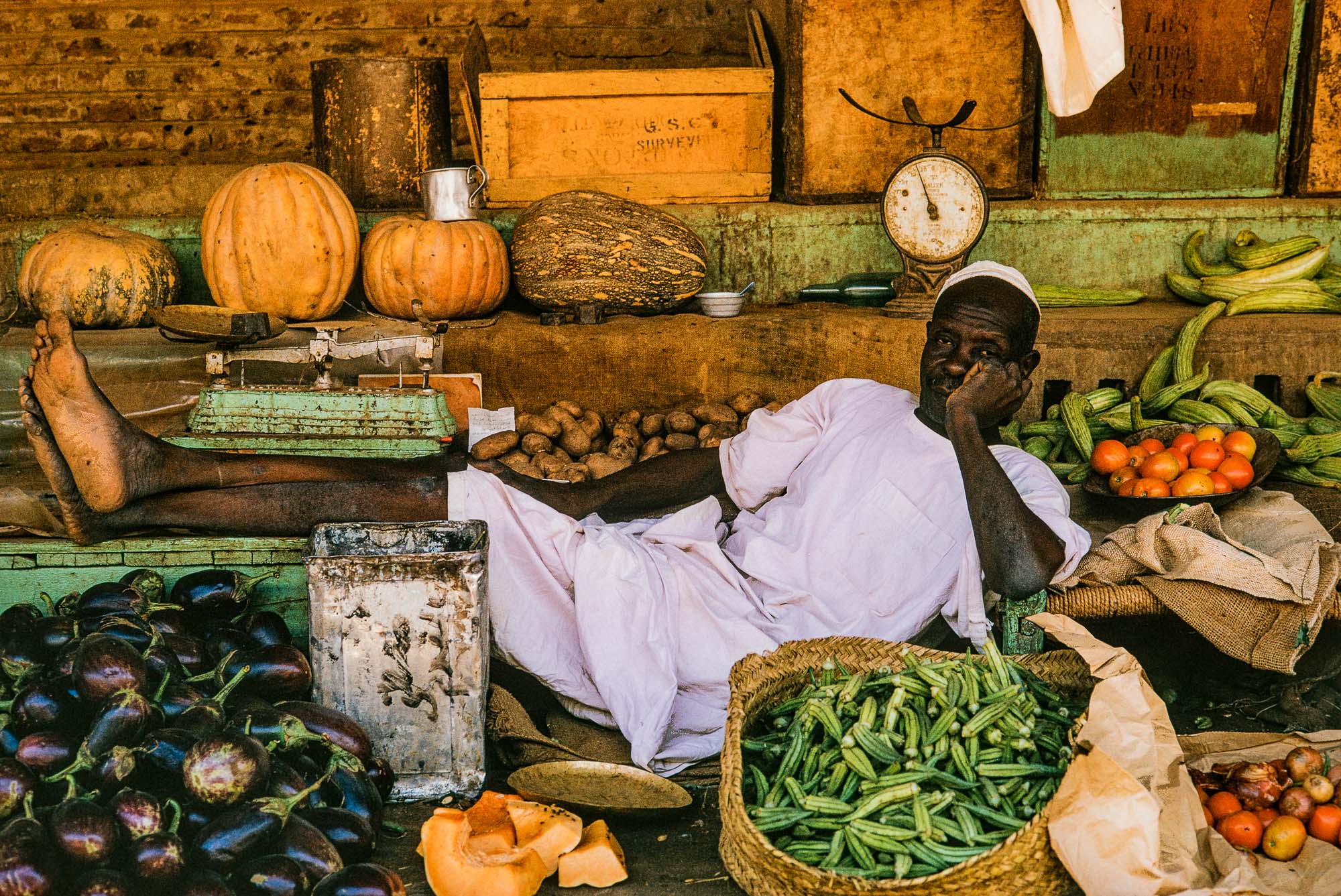
Vegetable Man, Khartoum

Excerpt from Light Gesture & Color:

Sometimes there‰۪s not a lot to say about a photograph. You‰۪re walking along and Bam!åÊIt‰۪s in your lap. This is the kind of thing that you really don‰۪t have time to think about.åÊ

If you‰۪re like me you don‰۪t want to ask someone to pose for you. You know that it willåÊchange the whole thing that attracted you in the first place. Also, if you don‰۪t speak theåÊlanguage you know you‰۪ll screw up the request.

I was walking along in a market in Omdurman, a suburb of Khartoum, in the Sudan.

The man, his gesture of relaxation, his ‰ÛÏwork‰۝ and the gestures of all the vegetables wereåÊgreat for me.åÊ

As I approached him I put the camera up to my eye, got two frames, smiled at him andåÊmade a thank you gesture, and I was gone.

Print Info
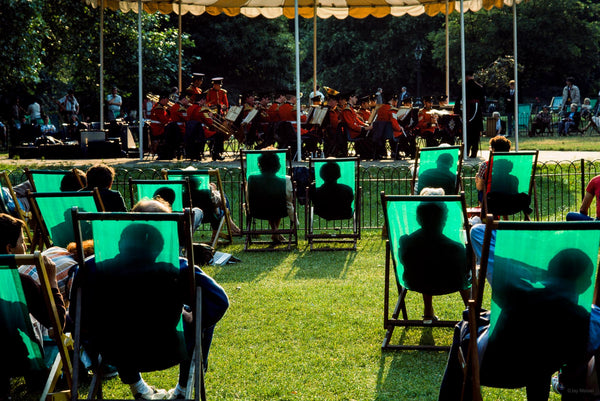
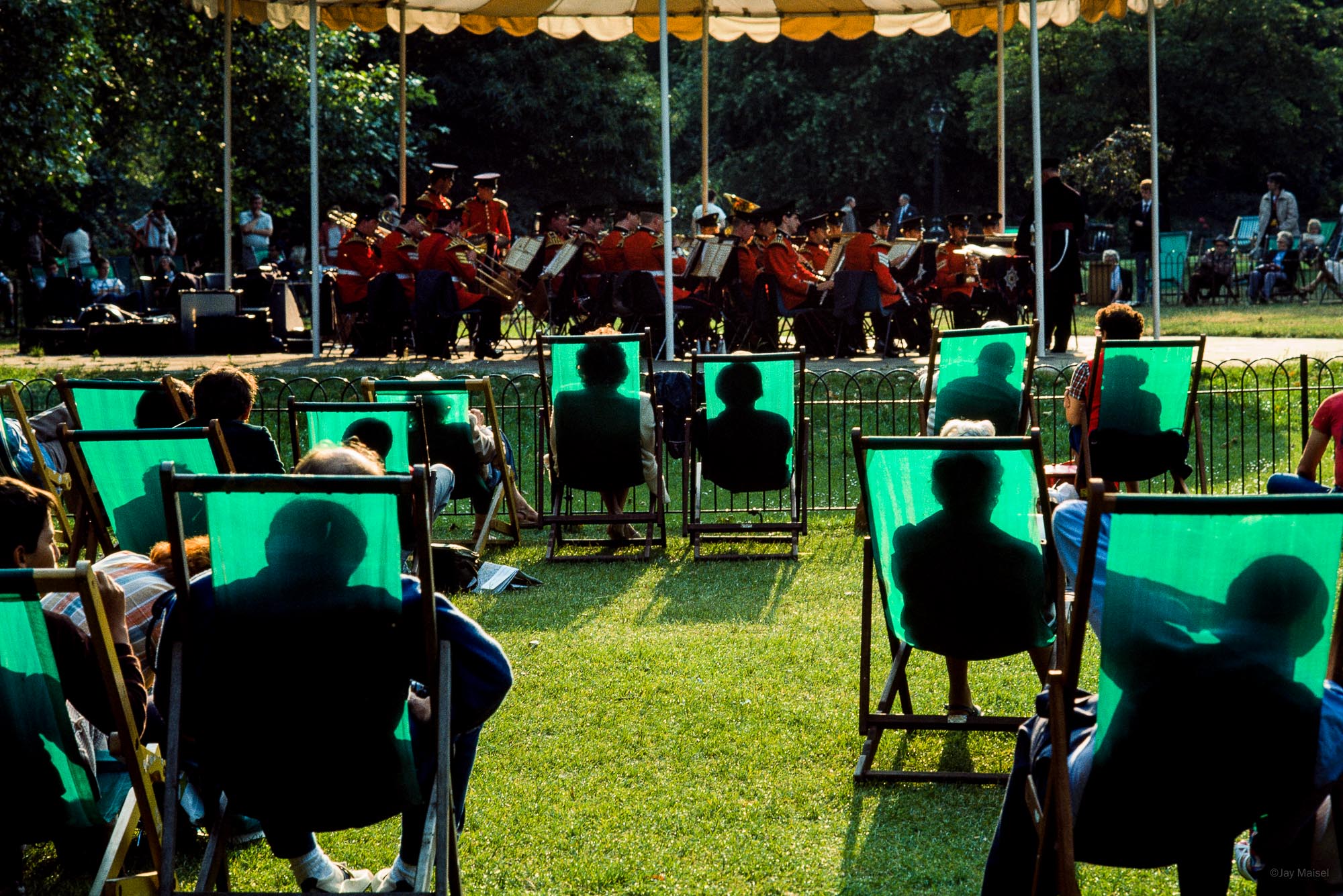
Hyde Park Lawn Chairs, London

Excerpt from Not About the F-Stop:

When I came upon this scene in Hyde Park in London, it took me a while to catch my breath. It was a wonderful gift so great I imagined it must have been photographed countless times by an endless parade of photographers before me. But I had to do it. 

As excited as I was to see it, imagine how crushed I was when it suddenly disappeared. Clouds had covered the Sun. I was in despair until I looked up at the sky and saw that it was just one cloud and it would move out of the way in a few moments.
As I waited I thought back to a phrase Garry Winogrand had used to describe this kind of phenomenon. He called it a “color event,” a variation of the concept of the decisive moment. A confluence, however momentary, of the juxtaposition of light and color that changed the very nature of what you’re looking at.
When the light re-appeared I worked on this for quite sometime, photographing different aspects of the situations. Long shots, close ups, wide angles, whatever I could think of.

The bizarre thing was that I had never seen anybody else’s photograph of it. Even more bizarre is that I have never seen a photograph of it since then.

Don’t over think things in front of you. If it moves you, shoot it. If its fun, shoot it. If you’ve never seen it before, shoot it.

Print Info